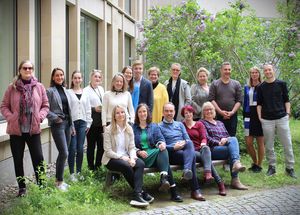
Group photo of members of the Strategy Circle for Technology and Innovation in the Federal Chancellery, standing in two rows, formal attire, Federal Chancellery, federal ministers, experts.
Miscellaneous  |  11/06/2025

Dietmar Harhoff Appointed to the German Chancellor’s Strategy Group for Technology and Innovation

Strong signal for innovation: On Thursday, 6 November 2025, Federal Chancellor Friedrich Merz invited to the Federal Chancellery for the inaugural meeting of the Strategy Group for Technology and Innovation (Strategiekreis Technologie und Innovation). Dietmar Harhoff, Director at the Institute and Head of the Economics Department, will contribute his expertise and experience in the field of policy advice to the committee.

Group photo of members of the Strategy Circle for Technology and Innovation in the Federal Chancellery, standing in two rows, formal attire, Federal Chancellery, federal ministers, experts.
The Federal Chancellor and Federal Ministers with the members of the Strategy Group for Technology and Innovation. Photo: Bundesregierung/Sandra Steins.

The Federal Chancellor’s Strategy Group for Technology and Innovation is the German government’s primary advisory body on technology and innovation policy. Appointed by the Federal Chancellor for the 21st legislative period, it comprises members of the federal government and high-ranking representatives from science and industry.


The first meeting was also attended by Federal Minister for Economic Affairs Katherina Reiche, Federal Minister for Research Dorothee Bär, Federal Minister for Digital Transformation Karsten Wildberger, and Head of the Federal Chancellery Thorsten Frei on behalf of the government. The Federal Minister of Finance, as another permanent member, and the Federal Minister of Defence were each represented by a state secretary.


The Strategy Group focuses on new developments, findings, and trends in the innovation cycle and discusses specific proposals for strengthening the research and innovation system, resilience, and technological sovereignty. Its goal is to leverage the potential of scientific research and industry to boost the innovative strength and competitiveness of Germany as an industry location and to strengthen the country’s defence capabilities. Topics discussed at the inaugural meeting included strengthening innovation and competitiveness in the security and defence industry and in artificial intelligence.


The Key Topics of the First Meeting


The first meeting focused on two key topics that will determine Germany’s future viability:


  • Artificial Intelligence as a key technology for productivity and value creation
  • Security and Defence Industry and its importance for freedom, security, and technological sovereignty

First, the high pace of AI development worldwide and its potential for increasing productivity in science, industry, and public administration were addressed. The members of the strategy group agreed that the significance of this future technology should no longer be viewed exclusively in terms of value creation and prosperity in Germany, but must also be discussed in the context of current social and geopolitical challenges.

Second, innovation potential in the security and defence industry was examined. Against the backdrop of current initiatives by the German federal government, possibilities were discussed for further accelerating the procurement process, strengthening capacity building through innovation spaces and iterative approaches, and generating economies of scale in production.

Based on a benchmarking of the strengths and weaknesses of the innovation system in an international comparison, the strategy group defined its level of ambition at its inaugural meeting. The aim is to leverage transfer potential through powerful initiatives and a substantial improvement in the framework conditions along the entire innovation chain.


The Steering Committee and Its Members


The work content of the Federal Chancellor’s Strategy Group for Technology and Innovation is prepared by an administrative office based at acatech – the German Academy of Science and Engineering.

The following representatives from industry and science were appointed to the steering committee of the Federal Chancellor’s Strategy Group for Technology and Innovation:

Entrance in Herzog-Max-Strasse
Event Report  |  10/23/2025

Innovation Research in the Very Heart of Munich

On 20 October, the Institute officially opened its new premises at Stachus, in the heart of Munich, with a festive opening ceremony. Representatives from academia, politics, the city and society lauded the relocation as an important milestone for research on innovation and competition processes and their regulation.

Entrance in Herzog-Max-Strasse
Entrance in Herzog-Max-Strasse. Photo: Myriam Rion
Patrick Cramer, President of the Max Planck Society
Patrick Cramer, President of the Max Planck Society. Photo: Myriam Rion
Johannes Eberle  (Bavarian State Ministry for Science and the Arts)
Johannes Eberle (Bavarian State Ministry for Science and the Arts). Photo: Myriam Rion
The First Deputy Mayor of Munich, Dominik Krause, with the Managing Director of the Institute, Josef Drexl
The First Deputy Mayor of Munich, Dominik Krause, with the Managing Director of the Institute, Josef Drexl. Photo: Myriam Rion

In their welcoming addresses, Patrick Cramer, President of the Max Planck Society, and leading representatives from science, politics, and society highlighted the importance of the Institute’s research, and the opportunities to create impulses in the new environment. It emerged clearly that research serves not only as a driving force for innovation and progress, but also, in light of current societal developments, must be more deeply rooted in the heart of society than ever before.


Prof. Dr. Patrick Cramer, President of the Max Planck Society

“The Max Planck Institute for Innovation and Competition is at the cutting edge of our times with its mission. It researches the legal and economic foundations of innovation, competition, and regulation. At a time when Germany must reinvent itself amid digital transformation, bureaucratic inflexibility, and geopolitical tensions, this research — especially this research — is indispensable. It is research that first poses the questions before providing the answers through which the Institute offers guidance for the societal and political process — a process we can never replace, only accompany. The relocation sends a clear signal: science — and particularly such important research as is conducted here, which also touches on the future of our economic system — belongs at the heart of the city, at the heart of society.”


Dr. Johannes Eberle, Bavarian State Ministry for Science and the Arts, Head of the department Research/Science System

“The Max Planck Institute for Innovation and Competition embodies everything a science minister, an economics minister, or a federal minister could wish for: it delivers outstanding research that does not remain confined to the so-called ivory tower, but reaches and impacts society as a whole — and has done so for almost 60 years. Since its founding in 1966, the Institute has been a key source of inspiration for the major issues of our time. […] Yet, an institute devoted to innovation and competition does not, of course, live primarily on its past achievements, but on its creative energy for the present and the future. Here, too, it is evident that the Institute has its finger on the pulse of the times, contributing more than ever to addressing the key questions of our society. It makes valuable contributions to the great transformations of our century, particularly in the field of artificial intelligence — especially with regard to the major challenges of data and copyright law. Moreover, it provides highly relevant research on how innovation and government incentives can help stimulate a stagnating economy.”


Dominik Krause, First Deputy Mayor of the City of Munich

“The Max Planck Institutes are a fundamental part of the innovation ecosystem we have here in Munich — and this is especially true for the Max Planck Institute for Innovation and Competition. I would also like to congratulate you on your move to the beautiful Herzog Max building. You and your colleagues are doing outstanding work — now in a location that could not be more central, and one that sets an example for the future of Munich’s city center. Congratulations on your relocation — also on behalf of the City of Munich. We are truly delighted to have you here, in the very heart of our city.”


The event centered on a panel discussion entitled “Inform, Advise, Shape – Innovation Research and Policy”, featuring outstanding personalities. Journalist and moderator Dr. Jan-Martin Wiarda spoke with leading experts about key issues at the interface between science and politics. The panel guests Prof. Dr. Irene Bertschek (Chair of the Commission of Experts for Research and Innovation), Rafael Laguna de la Vera (Director of the Federal Agency for Breakthrough Innovations SPRIND), and Prof. Dr. Rupprecht Podszun (Member of the Monopolies Commission) discussed, among other things, the role that innovation research can play in policy advice and where its limits lie, how social values can be reconciled with economic interests, how major challenges of our time can be addressed, and which new dangers might arise at the same time.


The program also included guided tours of the landmark, listed building at Karlstor, which also houses the Institute’s renowned library. Its collection currently comprises more than 245,000 volumes, is unique worldwide in its international orientation and completeness, and attracts academics from around the world.


While many German city centers are struggling with vacancies and dwindling interest, the building known as “Herzog Max” is a forward-looking project that sets standards for the transformation of city centers. This was highlighted in a panel discussion between architect Thomas Fechtner (OSA Ochs Schmidhuber Architekten) and owner representative Günter Koller (Wilhelm von Finck Hauptverwaltung GmbH) in conversation with the Institute’s managing director, Prof. Dr. Josef Drexl, and moderator Dr. Jan-Martin Wiarda. The remarkable redevelopment demonstrates how urban centers can reinvent themselves. The Institute also intends to use its new location as an opportunity to offer the urban society a “showcase to science” and to help the public better understand the significance of complex scientific topics.


The second day of the Grand Opening featured an Opening Symposium on Innovation Research in Disruptive Times. An event report will follow soon.

Prof. Dr. Heiko Richter, LL.M. (Columbia), Dipl.-Kfm.
People  |  10/01/2025

Heiko Richter appointed Chair of Private Law and Regulation of the Digital Economy and Society at the University of Speyer

Heiko Richter, who has been a Research Fellow at the Institute since 2020, has accepted a call from the University of Speyer and has been appointed University Professor at the German University of Administrative Sciences Speyer (DUV). Since 1 October 2025, he holds the newly established Chair of Private Law and Regulation of the Digital Economy and Society.

Prof. Dr. Heiko Richter, LL.M. (Columbia), Dipl.-Kfm.
Heiko Richter appointed Chair of Private Law and Regulation of the Digital Economy and Society at the University of Speyer
Prof. Dr. Heiko Richter, LL.M. (Columbia), Dipl.-Kfm.
Heiko Richter appointed Chair of Private Law and Regulation of the Digital Economy and Society at the University of Speyer

The Chair’s research focuses on private law and digitalization law (including data and platform regulation) as well as regulatory and legal theory at the intersection of state, market, and society.
 

Heiko Richter worked at the Institute as a Doctoral Researcher and Junior Research Fellow in the Intellectual Property and Competition Law Department from 2014 to 2020. His dissertation, supervised by Heike Schweitzer at Humboldt University in Berlin, is entitled “Information as Infrastructure.” It was awarded the 2020 Humboldt Prize. Since 2020, Heiko Richter has been a Senior Research Fellow at the Institute in the department headed by Josef Drexl and a lecturer in private law at Ludwigs-Maximilians-Universität (LMU) in Munich. He remains closely associated with the Institute as an Affiliated Research Fellow.

Postcard with photos of the Max Planck Foundation building and surroundings at Lake Tegernsee
Award  |  09/22/2025

Writing Scholarship for Liza Herrmann

Living and working like Max Planck in the physicist’s summer house on Lake Tegernsee: what could be better than going into writing retreat during the final phase of your dissertation? Liza Herrmann, a doctoral researcher at the Institute, has successfully applied for a writing scholarship from the Max Planck Foundation and is working on completing her doctoral thesis in rural seclusion in September.

Liza Herrmann in the sunny pre-Alpine landscape
Doctoral Researcher Liza Herrmann. Photo: private
Postcard with photos of the Max Planck Foundation building and surroundings at Lake Tegernsee
Greetings from Lake Tegernsee

Liza Herrmanns’s research focuses on whether bots should be considered a competitive threat and how they should be regulated by lawmakers.


Thanks to the Max Planck Foundation and its sponsors, Max Planck scientists can apply for a writing scholarship at this beautifully located site almost directly on the lake. And where better to write a scientific paper such as a dissertation than at the “Grundner,” where the quantum physicist and Nobel Prize winner spent his holidays every year from 1885 to 1943?


With a little luck, scholarship holders may also meet Gabriele Taylor, Max Planck's great-granddaughter, who lives in the attic of the former farmhouse on Lake Tegernsee and rents the lower rooms to the foundation. The house, which has no immediate neighbors, belongs to the municipality of Bad Wiessee and is suitable for peaceful scientific work in any season: located about 50 km south of Munich, it offers enough space for up to three scholarship holders at a time, with a total of 150 square meters, three workrooms, three bedrooms, common rooms, a terrace, and a kitchen.


Information about the writing scholarship is available at the webseite of the Max Planck Foundation.

Miscellaneous  |  07/01/2025

Call for Contributions: National Innovation Systems in Central Asia – A Cross-Disciplinary Edited Volume

We invite chapter proposals for a forthcoming book exploring the evolution and future of National Innovation Systems across Central Asia. The overall objective of this project is to develop a rich, contextualised understanding of where Central Asian states stand in terms of their vision and strategies for innovation, through a reflective sense-making and solution-oriented exercise.

While the region has implemented substantial social, economic, and legal reforms in recent decades, there remains a lack of critical appraisal grounded in a systematic analysis, especially in English-language literature.


To address this gap, the collection will solicit and present diverse, in-depth perspectives, offering:
 

  • Interpretative analyses of the evolution of National Innovation Systems in Central Asia, examining particular phenomena and shaping factors (‘How have we come to where we are’)
  • Normative assessments of how National Innovation Systems in the region should be further developed (‘What’s next?’)


Please find all details and suggested themes in the concept note.
 

  • The deadline for abstracts (300–500 words) is 10 August 2025.
  • Please submit proposals and brief bio to: Dr Daria Kim (editor) daria.kim(at)ip.mpg.de
  • Notification: 25 August 2025
  • Full chapters (6,000–8,000 words): 31 October 2025
  • Expected publication: 2026

Construction site entrance to the new institute building with signs pointing to the event
Event Report  |  06/02/2025

Munich Summer Institute 2025

The first event to be held at the Instituteʼs new venue was the Munich Summer Institute (MSI), now in its ninth year. Since its premiere in 2016, the MSI has aimed to foster net­working within an international and interdisciplinary research community. It is jointly organized by the Center for Law & Economics at ETH Zurich, the Max Planck Institute for Innovation and Competition, the Technical University of Munich, the ISTO at LMU Munich, HEC Lausanne, and Cornell University.

Group photo at the Munich Summer Institute 2025
Participants of the Munich Summer Institute 2025. Photo: Myriam Rion
Construction site entrance to the new institute building with signs pointing to the event
A certain pioneering spirit was still called for when the first event was held in the new Institute building. Photo: Myriam Rion
New event space at the Munich Summer Institute 2025.
Baptism of fire for the auditorium in the new Institute building. Photo: Myriam Rion

The MSI 2025 took place from 26 to 28 May 2025 with around 85 participants in the Institute’s new premises – a successful and also instructive baptism of fire in terms of technical and procedural aspects. This year’s event offered an inspiring synthesis of academic exchange and networking in the research fields of digitalization, artificial intelligence, innovation, intellectual property, organizational design and digital governance.


The main conference was preceded by the fourth MSI Ph.D. Workshop on 21 May 2025 at Ludwig-Maximilians-Universität (LMU) Munich. This one-day event brought together early career researchers from across Europe and beyond. The program included five sessions that focused on digitalization, platform competition, entrepreneurship and eco-innovation, and innovation and learning. Projects ranged from empirical studies on copyright enforcement and algorithmic influence to research on carbon markets and intergenerational knowledge transfer.


The program of this year's main conference included two keynote speeches, 16 presentations to the plenary and two poster sessions, again preceded by very engaging poster slams. The program of the first day started with a guided city tour from the LMU through the historic old town of Munich to the new Institute building. The scientific part was dedicated to three lectures on the topic of organization. The day ended with the official reception.


The presentations on the second day of the conference dealt with topics from the areas of platforms and consumer computing technologies, AI and innovation as well as collaborative research and development. In her keynote entitled Innovation in Digital Platforms: How Can Regulation and Antitrust Help?”, Fiona Scott Morton, Theodore Nierenberg Professor of Economics at Yale University School of Management and Adjunct Professor at Yale Law School, presented her latest research on antitrust policy and platform regulation.


In keeping with good MSI tradition, the second day ended with a hearty dinner in a typical Bavarian tavern. Here, Khwan Kim (INSEAD) received this year’s Best Paper Award for his paperKindle’s Shadow: How Digitization Dims Novelty in Creative Industries”, co-authored with Manav Raj, which provides new insights into the unintended consequences of digital transformation..


The last day of the conference featured presentations on the topics of patents, data protection and security. Michela Giorcelli, Associate Professor at the University of California, Los Angeles, provided a historical perspective on the diffusion of innovations in post-war economies in her keynote speech onThe Diffusion of Soft Technologies During and After World War II”, presenting compelling reflections on long-term growth and technological change.


All those involved in the organization would like to thank the speakers, discussants and the participants for an exciting Munich Summer Institute 2025. We are already looking forward to the Munich Summer Institute 2026, then the tenth MSI!


More information: http://munich-summer-institute.org

Logo of the cluster of excellence TransforM, showing an abstracted butterfly.
Miscellaneous  |  05/23/2025

TransforM Receives Funding as a Cluster of Excellence

On 22 May 2025, it was announced that the Munich Center for Transformative Technologies and Societal Changes (TransforM) will be funded by the German Research Foundation (DFG) over the next seven years as one of 70 Clusters of Excellence as part of the Excellence Strategy of the German Federal and State Governments. The Institute is a part of the Cluster of Excellence, Dietmar Harhoff was a co-applicant.

Logo of the cluster of excellence TransforM, showing an abstracted butterfly.

TransforM aims to advance social science​ for highly technologized societies​ to better understand and shape​ the transformative power ​of technology​. The goal is to better understand why, when, and how technologies become socially transformative, and to critically assess and inform transformation pathways ‘all the way through’ – from the early stages of their emergence to their wider socio-economic impact.


The application was submitted by the Technical University of Munich (TUM). Other participating institutions are the ZEW – Leibniz Centre for European Economic Research, and at Ludwig-Maximilians-Universität, the Institute for Leadership and Organization with Prof. Martin Högl and the ifo Center for the Economics of Innovation and Digital Transformation with Prof. Oliver Falk. Cooperation partners are Bayern Innovativ, the Bavarian Research Institute for Digital Transformation - bidt, DEEP Ecosystems, the Deutsches Museum, the Institute for Employment Research (IAB) and UnternehmerTUM.


TransforM tackles the dual challenge of advancing fundamental social science for technologized societies and rethinking technology development through a social science lens head on. As an interdisciplinary social science cluster with a principal focus on technology, it is to augment current theories and methods to comprehensively understand and help shape transformative technology to better serve diverse societal needs..


More information: https://transform-cluster.de/

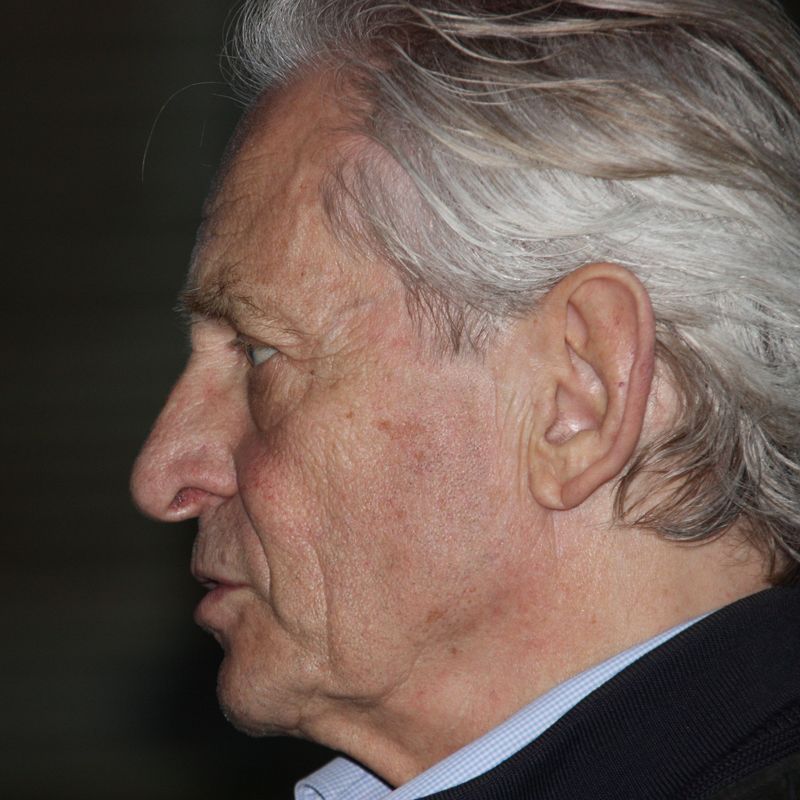
Paul Katzenberger
Miscellaneous  |  05/15/2025

On the Passing of Paul Katzenberger

On 24 April 2025, shortly before his 88th birthday, our long-standing colleague and friend Dr. Paul Katzenberger passed away. He was one of the Institute's first employees: Paul Katzenberger joined the Institute for Industrial Property at the University of Munich in 1956 and was involved in every stage of the Institute's history.

Paul Katzenberger
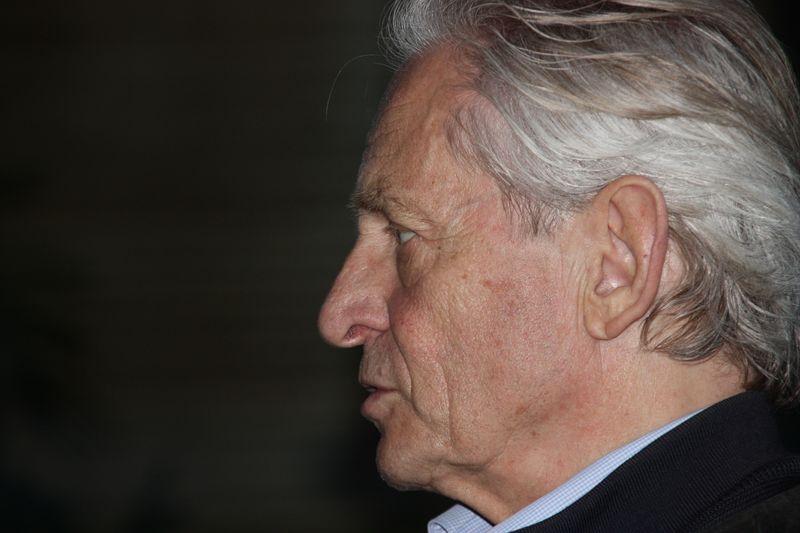
Dr. Paul Katzenberger in 2008
Paul Katzenberger
Dr. Paul Katzenberger in 2008

In 1967, he obtained his doctorate under Eugen Ulmer with a thesis on corporate law, which was one of the first to appear in the Green Series on Industrial Property Rights. He later turned his attention to copyright law and private international law and became a renowned expert in these fields as a Senior Research Fellow. Among his many publications, the editing of the Quellen des Urheberrechts (Sources of Copyright) and his contribution to the Schricker Commentary on Copyright are particularly noteworthy. Early on, he meticulously built up the Institute's documentation, which was a unique and indispensable source for research in industrial property law and copyright law in the pre-digital age.


As head of the Institute's Germany Department, Paul Katzenberger accompanied and supported generations of doctoral candidates during the difficult phase of their doctoral studies and often remained a reliable advisor to them. Even after retiring in 2002, he continued to work for the Institute, initially as a Senior Research Fellow and then as an Affiliated Research Fellow. He only gave up his work as a lawyer specializing in copyright law a few years ago.


With Paul Katzenberger's passing, we have lost a highly esteemed colleague who played a key role in shaping the Institute's public image and promoting its reputation during his active career. For many of us, he was also a reliable source of expert advice and a good friend. We will miss him and cherish his memory.

The new premises of the Max Planck Institute for Innovation and Competition at Karlstor/Stachus in Munich
Miscellaneous  |  04/30/2025

Science in the City – The Institute at its New Location

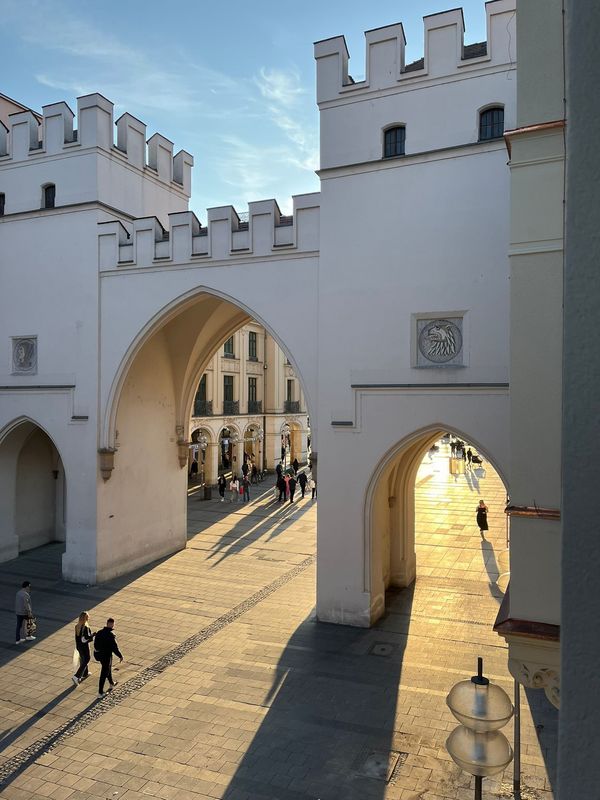
The Max Planck Institute for Innovation and Competition has moved to its new location in the center of Munich. Since 1 May 2025, you can find us at Herzog-Max-Straße 4, 80333 Munich – directly at Karlstor/Stachus in the heart of Munich.

The new premises of the Max Planck Institute for Innovation and Competition at Karlstor/Stachus in Munich
The Karlstor gate in Munich
The Karlstor, adjacent to the Institute
The head of library places the first book in the new library
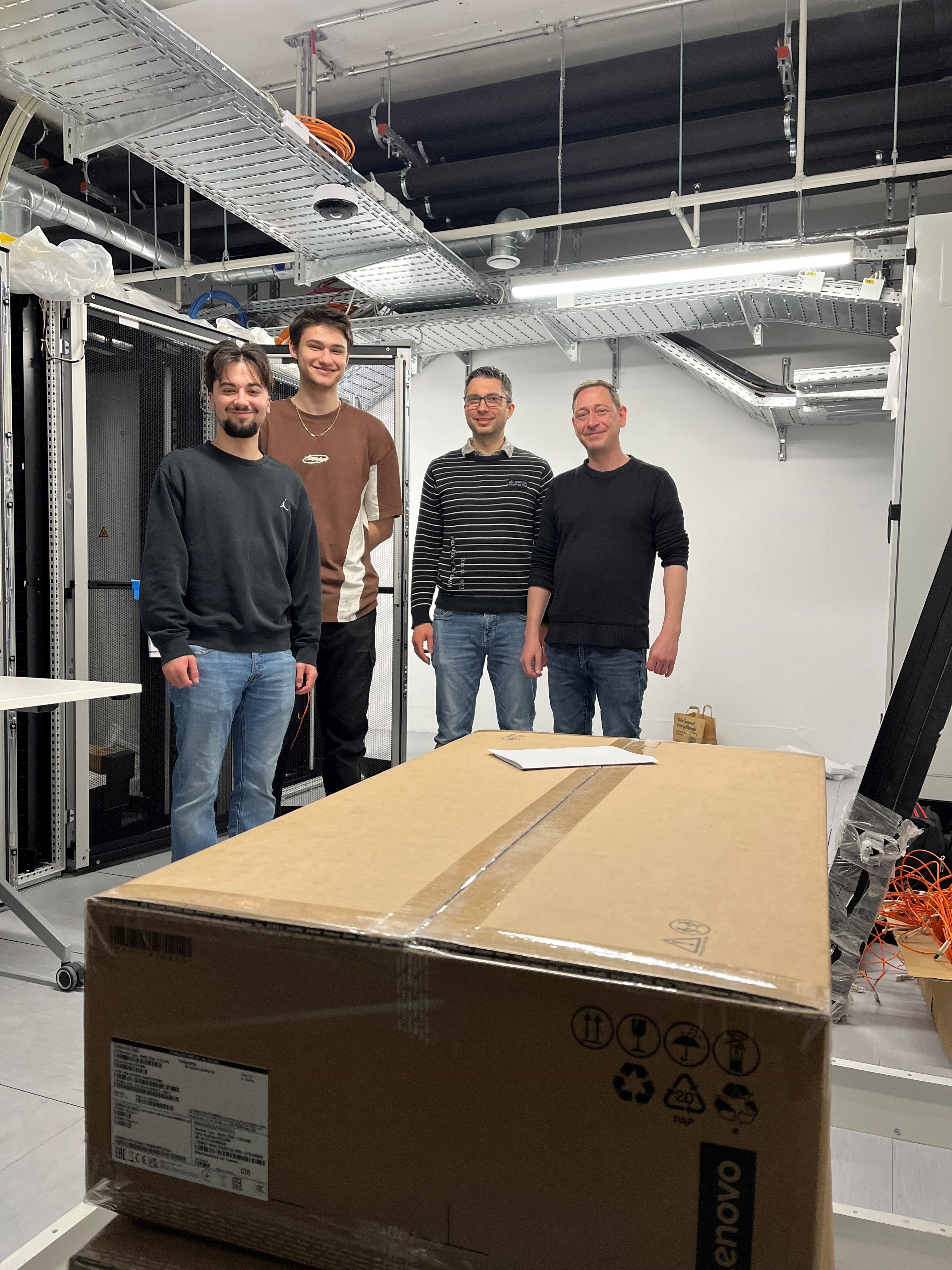
The IT team with the server delivery for the new Institute location
Curved spiral staircase as a special connection between the departments
Special connections between the law and economics departments

The central location continues to guarantee excellent connections to the LMU and the Technical University of Munich. This maintains important prerequisites for scientific cooperation, joint teaching and events, as well as the training and supervision of doctoral students.


Good Accessibility in a Central Location


The new location has excellent public transport accessibility. The subway and S-Bahn station “Karlsplatz (Stachus)” is located directly next to the Institute and is served by the subway lines U4 and U5 as well as almost all S-Bahn lines (including S1 and S8 from/to the airport). The connection to the public transportation network makes the new location quickly and easily accessible from the city as well as from the airport or the main train station.


Our special thanks go to:


  • the library, which ensured that researchers had continuous access to the collections despite the logistical challenges of the move,
  • the administration and facilities management, who planned and supported the move with great dedication,
  • and the IT department, which has created a modern infrastructure on which research at the Institute can continue to thrive.

First Events Starting at the End of May


The first event in the new building from 26 to 28 May 2025 was the Munich Summer Institute 2025, which was organized jointly with the Center for Law & Economics at ETH Zurich, the Technical University of Munich, the ISTO at LMU Munich, HEC Lausanne, and Cornell University. It was a successful and also instructive baptism of fire in terms of technical and procedural aspects. Although some pioneering spirit was still called for from the participants, for example to find access through stairwells that were still under construction, the event ran professionally and smoothly. The MPF Start-up School, a start-up initiative of the Max Planck Foundation, was hosted right afterwards. The regular seminars then got underway.


HERZOG MAX presented to the Public in July


On 8 July 2025, the owner and the project developer presented HERZOG MAX, as the building is named, to the public in the presence of representatives from politics, industry and society. Speakers included the Bavarian Minister of Construction Christian Bernreiter (CSU), City Planning Councillor Elisabeth Merk (non-party) and Munich’s Economic Affairs Officer Christian Scharpf (SPD). The successful contribution to the transformation of Munich’s city center was particularly emphasized. This conversion of a vacant former department store into a mixed-use building, which brings more life and work back into the city center, is exemplary for other German city centers. “Research belongs at the heart of society – exactly where we are now with Herzog Max,” said Josef Drexl, Managing Director at the Institute.


You can watch a television report by Matthias Flasskamp on the opening of the new building from “Abendschau - Der Süden” of Bayerischer Rundfunk on 8 July 2025 in the ARD Media Library:


Television Report


We look forward to welcoming you to the new location soon. An Institute opening event with a scientific symposium is in planning for October – we will be reporting.


Updated on 15 July 2025

RISE Workshop logo
Miscellaneous  |  04/15/2025

Call for Papers – RISE8 Workshop

Young researchers working in the fields of Economics or Management who would like to present an empirical research paper at the 8th Research on Innovation, Science and Entrepreneurship Workshop are invited to submit it until 25 July 2025.

For the eighth time now, the two-day event is organized by Ph.D. students and Postdocs of the Department Innovation and Entrepreneurship Research headed by Dietmar Harhoff to give young scholars the opportunity to present their work.


The RISE8 Workshop on 15/16 December 2025 aims at stimulating a rigorous in-depth discussion of a selected number of research papers by Ph.D. students and Junior Post-docs, providing feedback and connecting with peers from other research institutions.


Keynote speaker of the RISE8 Workshop is Matt Marx (Cornell University).


Get the Call for Papers RISE8.


See RISE8 Workshop Website.