Congratulations on completing your apprenticeship! How do you feel now that you have successfully completed your apprenticeship, and what does this achievement mean to you personally?
I'm doing very well. I'm very happy that I made it. It was very important to me to complete the apprenticeship when I decided to do it. And that's what I've achieved now.
Which experiences or challenges have particularly affected you during your training?
There was one very big thing: in my second year of training, I was able to visit the Art History Institute in Florence for two weeks, which is also a Max Planck Institute. I gained a lot of new impressions there. It was also a challenge personally: alone in a foreign country, in a foreign city, without speaking the language. But it was really very nice and an enriching experience.
What did you like best about your training at the Institute? Do you have any special memories of projects or experiences?
Of course, the already mentioned visit to Florence. I also spent two days at the Harnack House in Berlin, where I provided organizational support for a scientific event. That was also a very nice and interesting experience. In addition, we had an administrative retreat because our administrations are now being merged*. It was a very good opportunity for us to exchange ideas. This is an ongoing project that will probably be with us for some time to come. But it is very interesting.
*Editor's note: The Max Planck Institute for Innovation and Competition and the Max Planck Institute for Tax Law and Public Finance have had joint administration since they emerged from the Max Planck Institute for Intellectual Property, Competition and Tax Law in 2011. In 2024, the administration of the Max Planck Institute for Social Law and Social Policy was integrated.
What skills or knowledge did you develop during your apprenticeship that will now help you in your new position in accounting?
I have definitely become more confident and independent, especially with regard to work processes. I have learned a great deal in this regard. Because I have been in many different units, I am familiar with the interrelationships and am sometimes better able to assess how something is to be classified or understood.
Was the position in accounting something you prefered, or was there a vacancy at the moment?
It was my own preference. I liked many areas of the administration, but I most enjoyed working in the accounting team. And then I was lucky enough to be offered a two-year contract.
You are now a permanent member of the administration team. What are your expectations and hopes for your professional future there?
I want to gain work experience and continue learning. We make a very good team here and I hope it stays that way. It makes you feel even better about your job.
What makes the administration of the three Max Planck Institutes a special place to work and be trained?
The field of work is very extensive, especially now that the administrations of the institutes are being merged. We are looking at what we can take from each other's administrative processes and thus improve overall and simplify processes. It is very varied, also because there are a lot of regulations in the public sector that we have to follow.
Are there fundamental differences in the work culture between the two administrations as they grow together, or are they just details that are handled differently?
Some processes are entirely different. We try to combine them so that you end up with a process that has elements from both. However, I noticed that there were significant differences in some areas due to the level of digitization. These were the first to be adjusted.
What advice would you give to young people interested in an apprenticeship as an office management assistant?
Definitely do it! The profession is very extensive and varied. There are many different areas in which you can learn something. You don't always learn in great depth, but you learn the basics in every area. That's a good foundation for your future career.
(The interview was conducted by Hella Schuster.)












![[Bitte nach "english" übersetzen:] Dr. Moritz Sutterer. Foto: Tina Weber](/fileadmin/_processed_/7/f/csm_Heinrich_Hubmann_Preisverleihung_2025_02-Foto_Tina_Weber_6058de7542.jpg)
![[Bitte nach "english" übersetzen:] Dr. Moritz Sutterer. Foto: Tina Weber](/fileadmin/_processed_/7/f/csm_Heinrich_Hubmann_Preisverleihung_2025_02-Foto_Tina_Weber_06628ab010.jpg)
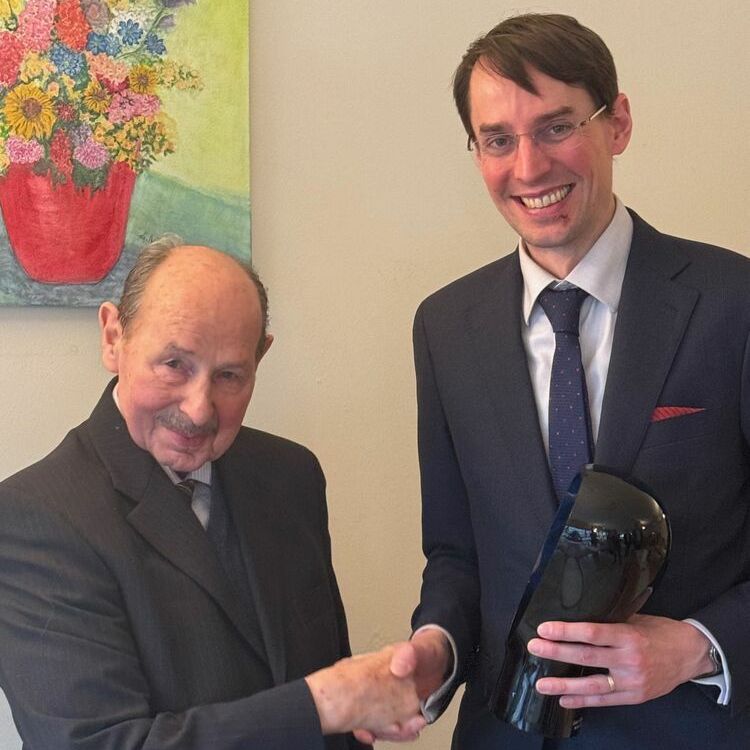
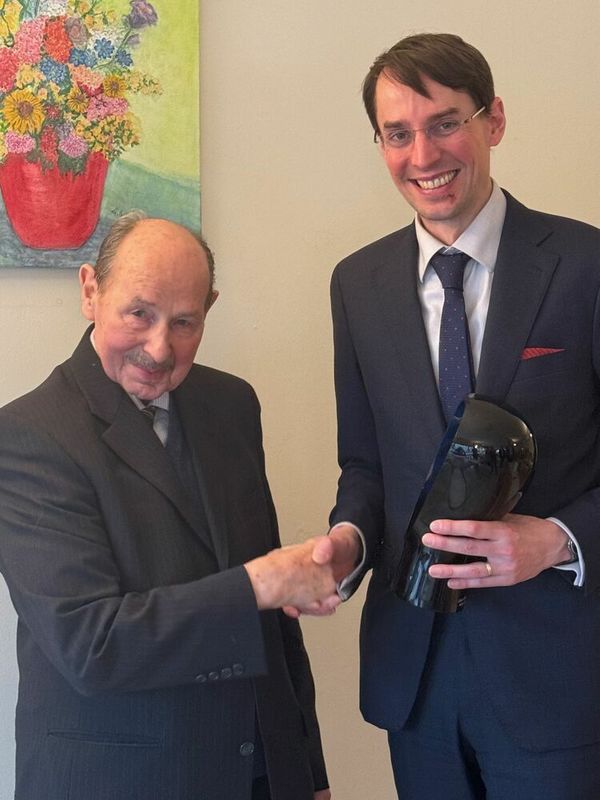
![[Bitte nach "english" übersetzen:] Dr. Moritz Sutterer (2.v.l) eingerahmt vom Laudator Prof. Dr. Michael Grünberger, LL.M. (NYU) (1.v.l.), Prof. Dr. Josef Drexl, LL.M. (UC Berkeley) und Dr. Robert Staats, Vorstand VG WORT. Foto: Tina Weber](/fileadmin/ipmpg/content/aktuelles/aus_dem_institut/Heinrich_Hubmann_Preisverleihung_2025_Foto_Tina_Weber_web.jpg)

![[Bitte nach "english" übersetzen:] Logo European Law Group with Silhouette of Europe](/fileadmin/_processed_/9/7/csm_European-Law-Group_c4690bbfbd.png)
![[Bitte nach "english" übersetzen:] Logo European Law Group with Silhouette of Europe](/fileadmin/ipmpg/content/aktuelles/aus_dem_institut/European-Law-Group.png)