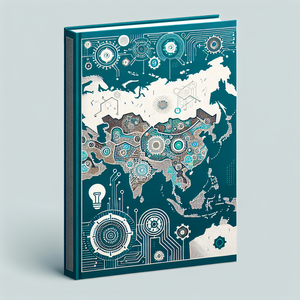
Screenshot GRUR International Cover GEMA vs OpenAI
Miscellaneous  |  02/09/2026

GEMA v OpenAI - Professional English Translation Free to View at GRUR International

A professional English translation of the GEMA v OpenAI case (42 O 14139/24) has been published by GRUR International. The translation is available free until and including 15 February. This translation is intended to promote a broader, linguistically accessible discussion in both academic and practical contexts.

Access the translation at GRUR International.

Call for Papers - Munich Summer Institute
Miscellaneous  |  01/13/2026

Call for Papers – Munich Summer Institute 2026

The 10th Munich Summer Institute, jointly organized with Cornell University, ETH Zurich, Imperial College Business School, LMU, TUM, and the University of Lausanne, will take place from 20 to 22 May 2026. Researchers who would like to present a paper are invited to submit it online until 8 February. A workshop for Ph.D. students will be held again this year, on 20 May.

The Munich Summer Institute 2026 will take place as an in-person event in Munich. The Summer Institute will be preceded by the fifth MSI Ph.D. Workshop on 20 May 2026. A best Ph.D. student paper award will be awarded during the MSI conference dinner.


The Summer Institute will focus on three areas:

The goal of the Munich Summer Institute is to stimulate a rigorous in-depth discussion of a select number of research papers and to strengthen the interdisciplinary international research community in these areas. Researchers in economics, law, management and related fields at all stages of their career (from Ph.D. students to full professors) may attend the Munich Summer Institute as presenters in a plenary or a poster session, as discussants or as attendees. The Munich Summer Institute will feature two keynote lectures, several plenary presentations, as well as poster sessions (including poster slams).


The Munich Summer Institute will be held at the Max Planck Institute for Innovation and Competition in the heart of Munich. There is no registration fee, but participants are expected to fund their own travel and accommodation. The Munich Summer Institute may provide limited travel scholarships in case of financial hardship.


Keynote Speakers
 

  • Hong Luo (University of Toronto, Rotman School of Management)
  • Ariel Dora Stern (Hasso Plattner Institute and University of Potsdam)


Paper submission procedure


Researchers who would like to present a paper are invited to submit their paper online by 8 February 2026. The Munich Summer Institute only considers papers which have not been published or accepted for publication at the date of submission. Paper selections will be announced in late March 2026. The program of the Munich Summer Institute will be available by early April 2026. All accepted papers will be made available to all participants by 1 May 2026. Researchers who would like to attend the Munich Summer Institute without giving a presentation should contact msi2026(at)ip.mpg.de by 15 April 2026.
 

Online Paper Submission


Further information


More information is available at the MSI website. Any questions concerning the Munich Summer Institute should be directed to msi2026(at)ip.mpg.de.


Call for Papers and Call for Participants 

Participants of the RISE8 Workshop.
Event Report  |  12/17/2025

RISE8 Workshop 2025 − Fostering Scientific Exchange for the Next Generation of Innovation Scholars

The 8th edition of our annual Research in Innovation, Science, and Entrepreneurship (RISE) workshop, now a cherished pre-Christmas tradition, took place on 15/16 December 2025. Organized by young researchers at our Institute, the workshop serves as a platform for early-career scholars dedicated to the study of innovation.

Participants of the RISE8 Workshop.
Participants of the RISE8 Workshop. Photo: Myriam Rion
The Organizing Team.
The Organizing Team. Photo: Myriam Rion
Matt Marx during his keynote address.
Matt Marx during his keynote address. Photo: Myriam Rion

For the first time, the Department for Innovation and Entrepreneurship Research hosted the event at the Institute’s new premises at Munich’s Stachus and welcomed more than 40 presenters, discussants, and attendants from over 20 international universities. The program featured twelve paper presentations across seven specialized sessions covering topics such as gender and patents, green technologies, policy and innovation, technology transfer, the science of science, and artificial intelligence.


A major highlight of this year's event was the keynote address by Matt Marx, a professor at Cornell University and Department Editor at the renowned journal Management Science. In his inspiring address, Matt Marx introduced a new initiative that provides large-scale, open-access datasets. These datasets will enable more thorough research connecting scientific discoveries to innovation and entrepreneurship. This new resource promises to be a transformative tool for RISE participants and the broader innovation research community.


We would like to extend a heartfelt thank you to everyone who contributed to the resounding success of the RISE8 Workshop 2025. We are incredibly grateful to our inspiring keynote speaker, insightful discussants, and talented presenters for their exceptional contributions.


Special thanks go to the organizing team with Dietmar Harhoff, Dominik Asam, Johannes Könemann, Anastasiia Lutsenko, and Ulrike Morgalla, whose hard work made this event possible.


We are leaving this year's workshop feeling highly motivated and looking forward to RISE9 in 2026 with great enthusiasm!


The complete program for review:

Program RISE8 2025

Dietmar Harhoff wearing a dark blazer and purple shirt stands in front of a metallic column indoors.
People  |  12/17/2025

Rotational Change of Management of the Institute as of 1 January 2026

As of 1 January 2026, Dietmar Harhoff, head of the economics department “Innovation and Entrepreneurship Research”, assumes the role of Managing Director of the Institute through biennial rotation.

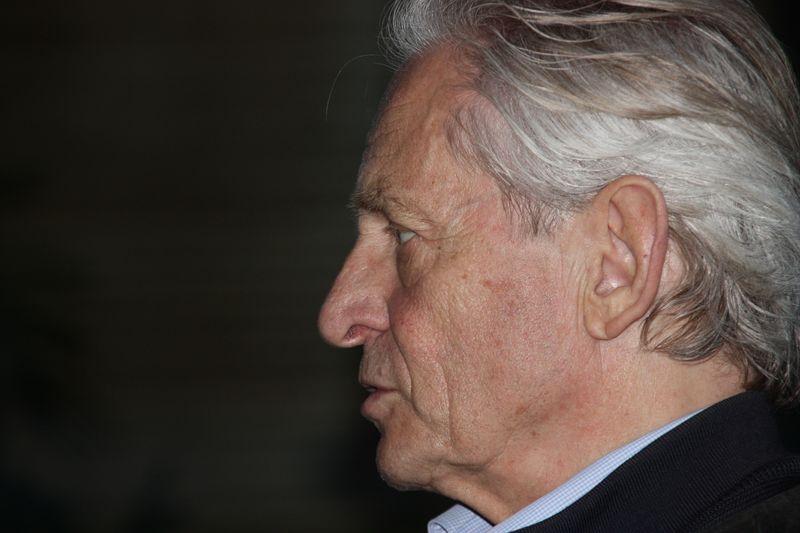
Dietmar Harhoff wearing a dark blazer and purple shirt stands in front of a metallic column indoors.
Prof. Dietmar Harhoff, Ph.D. Photo: Axel Griesch

He succeeds Josef Drexl, who has been Managing Director since 2024. Dietmar Harhoff has been Director at the Max Planck Institute for Innovation and Competition since 2013 and already served as Managing Director in 2015/2016 and in 2022/2023.

Blue poster with white text: 'Call for Nominations and Self-Nominations Directors (f/m/d)' and Max Planck Institute for Innovation and Competition logo.
People  |  12/01/2025

Call for Nominations: Directors (f/m/d)

The Max Planck Society is planning to appoint three new Directors to the Max Planck Institute (MPI) for Innovation and Competition in Munich. Together, they will define the future direction of innovation and competition studies within the Society. To identify suitable candidates for these positions, the Society is inviting nominations, including self-nominations. We seek scholars that will pioneer high-impact research programs and lead corresponding departments. The appointees’ research should offer a transformative perspective on innovation and competition, ideally bridging law and economics or other pertinent fields. Central to this role is the contribution of intellectual leadership to the Institute’s ongoing re-orientation, helping to chart its future scientific course.

Blue poster with white text: 'Call for Nominations and Self-Nominations Directors (f/m/d)' and Max Planck Institute for Innovation and Competition logo.

The MPI for Innovation and Competition has a distinguished reputation for its transdisciplinary analysis of innovation and competition. Its research program uniquely integrates law and economics to examine how rules and competition incentivize progress in an era of rapid social, economic, and technological change.  


The Institute is located in Munich, Germany, and has close ties with other leading research institutions, including the Ludwig-Maximilians-Universität (LMU) Munich and the Technical University of Munich. It is part of the Max Planck Society, an independent non-governmental association dedicated to fundamental research in the natural sciences, life sciences, social sciences, and humanities. 


The Max Planck Society, an equal opportunities employer, is firmly committed to diversity and inclusion in all aspects of recruitment and employment. The Max Planck Society especially aims at increasing the number of women as Directors at its Institutes and at eliminating discrimination on the basis of gender. We therefore welcome nominations of individuals from groups that are otherwise underrepresented in leadership positions in the Max Planck Society and its Institutes. We particularly encourage nominations of women. In case of equal qualification, women will receive preferential consideration, unless legally relevant interests based on the personal circumstances of the latter prevail.


Nominations, including self-nominations, should be sent to: nominations(at)ip.mpg.de.


A nomination should include:
 

  • the candidate’s name and current affiliation;
  • a brief motivational statement (200 words max.) specifying the reasons for nomination.

Note that this call is part of the Institute’s scouting procedure; its purpose is to inform the Institute about possible candidates. A formal appointment procedure will follow. As a result of this call, a selection of (self-)nominated candidates may be invited for a visit to the Institute.


All nominations will be treated in the strictest confidence.


This call will remain open until midnight (CET) on 15 January 2026.


Call for Nominations and Self-Nominations of Directors (f/m/d) as PDF.

Six people are pictured against a night sky with the silhouette of the city of Munich in the background—the organizing committee and the keynote speaker. The RISE Workshop logo can be seen in the upper right corner of the image, consisting of the words “RISE Workshop” and two diagonal lines in blue and gray.
Miscellaneous  |  11/21/2025

The Program Is Available Now! − RISE8 Workshop

On 15 and 16 December 2025, the Institute will host the eighth “Research in Innovation, Science and Entrepreneurship Workshop” from young researchers for young researchers. Participants can expect exciting topics and a stimulating exchange of ideas. Matt Marx, Bruce F. Failing Sr. Professor and Faculty Director of Entrepreneurship, Cornell University, will give the keynote speech on “Connecting Science to Innovation: Open Data and Machine Learning Approaches”.

The workshop was first organized by Junior Researchers in 2018, and is aimed at Ph.D. students and Junior Postdocs worldwide. RISE offers them an opportunity to present their work, receive feedback from experienced researchers and connect with peers from other research institutions.


See the Program RISE8 (PDF).


More information on the workshop website RISE8 Workshop.

Group photo of members of the Strategy Circle for Technology and Innovation in the Federal Chancellery, standing in two rows, formal attire, Federal Chancellery, federal ministers, experts.
Miscellaneous  |  11/06/2025

Dietmar Harhoff Appointed to the German Chancellor’s Strategy Group for Technology and Innovation

Strong signal for innovation: On Thursday, 6 November 2025, Federal Chancellor Friedrich Merz invited to the Federal Chancellery for the inaugural meeting of the Strategy Group for Technology and Innovation (Strategiekreis Technologie und Innovation). Dietmar Harhoff, Director at the Institute and Head of the Economics Department, will contribute his expertise and experience in the field of policy advice to the committee.

Group photo of members of the Strategy Circle for Technology and Innovation in the Federal Chancellery, standing in two rows, formal attire, Federal Chancellery, federal ministers, experts.
The Federal Chancellor and Federal Ministers with the members of the Strategy Group for Technology and Innovation. Photo: Bundesregierung/Sandra Steins.

The Federal Chancellor’s Strategy Group for Technology and Innovation is the German government’s primary advisory body on technology and innovation policy. Appointed by the Federal Chancellor for the 21st legislative period, it comprises members of the federal government and high-ranking representatives from science and industry.


The first meeting was also attended by Federal Minister for Economic Affairs Katherina Reiche, Federal Minister for Research Dorothee Bär, Federal Minister for Digital Transformation Karsten Wildberger, and Head of the Federal Chancellery Thorsten Frei on behalf of the government. The Federal Minister of Finance, as another permanent member, and the Federal Minister of Defence were each represented by a state secretary.


The Strategy Group focuses on new developments, findings, and trends in the innovation cycle and discusses specific proposals for strengthening the research and innovation system, resilience, and technological sovereignty. Its goal is to leverage the potential of scientific research and industry to boost the innovative strength and competitiveness of Germany as an industry location and to strengthen the country’s defence capabilities. Topics discussed at the inaugural meeting included strengthening innovation and competitiveness in the security and defence industry and in artificial intelligence.


The Key Topics of the First Meeting


The first meeting focused on two key topics that will determine Germany’s future viability:


  • Artificial Intelligence as a key technology for productivity and value creation
  • Security and Defence Industry and its importance for freedom, security, and technological sovereignty

First, the high pace of AI development worldwide and its potential for increasing productivity in science, industry, and public administration were addressed. The members of the strategy group agreed that the significance of this future technology should no longer be viewed exclusively in terms of value creation and prosperity in Germany, but must also be discussed in the context of current social and geopolitical challenges.

Second, innovation potential in the security and defence industry was examined. Against the backdrop of current initiatives by the German federal government, possibilities were discussed for further accelerating the procurement process, strengthening capacity building through innovation spaces and iterative approaches, and generating economies of scale in production.

Based on a benchmarking of the strengths and weaknesses of the innovation system in an international comparison, the strategy group defined its level of ambition at its inaugural meeting. The aim is to leverage transfer potential through powerful initiatives and a substantial improvement in the framework conditions along the entire innovation chain.


The Steering Committee and Its Members


The work content of the Federal Chancellor’s Strategy Group for Technology and Innovation is prepared by an administrative office based at acatech – the German Academy of Science and Engineering.

The following representatives from industry and science were appointed to the steering committee of the Federal Chancellor’s Strategy Group for Technology and Innovation:

Opening symposium "Innovation Research in Disruptive Times"
Event Report  |  10/24/2025

Opening Symposium on Innovation Research in Disruptive Times

On Tuesday, 21 October 2025, the second event in the celebrations marking the grand opening of the Institute’s new premises at Stachus took place in the form of a scientific symposium featuring two panel discussions on topics that are shaping innovation research in disruptive times. Over one hundred guests received thought-provoking insights and were able to engage in intensive discussions with colleagues from various disciplines.

Opening symposium "Innovation Research in Disruptive Times"
Opening symposium "Innovation Research in Disruptive Times". Photo: Myriam Rion
Panel “Innovation and New Geopolitics – Implications for Research“
Panel “Innovation and New Geopolitics – Implications for Research“. Photo: Myriam Rion
Panel “Regulation Between Global Challenges and Deglobalization”
Panel “Regulation Between Global Challenges and Deglobalization”. Photo: Myriam Rion

The first panel, moderated by Marina Chugunova, who has been a Senior Research Fellow in the Institute’s economics department since 2018, addressed the relationship between innovation and new geopolitics. The second panel was hosted by Heiko Richter, who was a Senior Research Fellow in the Institute’s legal department until September of this year and took over the Chair of Private Law and Regulation of the Digital Economy and Society at the German University of Administrative Sciences Speyer in October 2025. Together with his guests, he examined questions of regulation between geopolitical challenges and deglobalization.


Panel “Innovation and New Geopolitics – Implications for Research“
 

  • Prof. Fabian Gaessler (Pompeu Fabra University)
  • Prof. Dr. Carolin Haeussler (University of Passau / Commission of Experts for Research and Innovation)
  • Prof. Dr. Hanna Hottenrott (Technical University of Munich / TransforM Cluster of Excellence)
  • Prof. Dr. Rupprecht Podszun (Monopolies Commission / Heinrich Heine University Düsseldorf)
  • Dr. Marina Chugunova (Moderator)

During the panel discussion, experts in economics, law, and science policy explored how geopolitical tensions are reshaping global research collaboration, talent mobility, and technological competition. The discussion drew on historical parallels, current regulatory debates, and the realities faced by universities, research institutions, and companies. A central theme was the research community’s growing responsibility of to engage actively with society and decision-makers in order to ensure that scientific insights are clearly and meaningfully communicated at a time when misinformation and political polarization increasingly challenge evidence-based policymaking.


The panelists emphasized that we are living through a period of major reorientation in research and innovation, characterized by shifts in global alliances, tighter controls on sensitive technologies, and new questions about the balance between openness and security. The experts debated whether innovation today is driven more by competition or cooperation as they discussed the role of Big Tech, the challenges of regulating technologies that evolve faster than legal frameworks, and the growing importance of dual-use research. The discussion underscored that resilience in a rapidly changing environment requires not only effective governance but also societal trust.


A clear takeaway emerged: Europe’s ability to remain open, credible, and strategically agile will determine its position in the global innovation landscape for years to come.


Panel “Regulation Between Global Challenges and Deglobalization”
 

  • Prof. Dr. Michèle Finck (University of Tübingen)
  • Prof. Dr. Henning Grosse Ruse-Khan (University of Cambridge)
  • Dr. Malte Toetzke (Net Zero Lab / Max Planck Institute for Innovation and Competition)
  • Prof. Dr. Peter Yu (Texas A&M University)
  • Prof. Dr. Heiko Richter (Moderator)

The panel explored the evolving landscape of regulation at the intersection of global challenges and deglobalization pressures, guided by questions on how transnational issues like AI, climate change, intellectual property, and trade are addressed amid increasing national fragmentation. The discussants began by examining the EU’s role in digital and AI regulation, highlighting the Union’s shift toward a more assertive regulatory paradigm that still grapples with the tension between Member State interests and the need for global standards.


The conversation moved to the topic of climate change, where the transformative potential of AI in research and the uneven progress of international decarbonization efforts were discussed, emphasizing both the promise and limitations of current regulatory instruments. The focus then shifted to the regulatory philosophies of the U.S. and China, particularly in digital and IP domains, revealing divergent priorities and strategies shaped by economic and geopolitical competition. The panel concluded with a debate on the capacity and future relevance of multilateral institutions like the WTO in a more fragmented world, critically analyzing their limits and prospects for fostering global regulatory coherence.


The key insight emerging from the discussion was that effective regulation now requires navigating and mediating between global coordination needs and intensifying national retrenchment. Ultimately, the panel illustrated that regulation is increasingly positioned as a balancing act – not purely globalist nor strictly national, but as a flexible instrument that must adapt to shifting political, technological, and economic dynamics.

Entrance in Herzog-Max-Strasse
Event Report  |  10/23/2025

Innovation Research in the Very Heart of Munich

On 20 October, the Institute officially opened its new premises at Stachus, in the heart of Munich, with a festive opening ceremony. Representatives from academia, politics, the city, and society praised the relocation as an important milestone for the Institute, the City of Munich, and for anchoring research in society.

Entrance in Herzog-Max-Strasse
Entrance in Herzog-Max-Strasse. Photo: Myriam Rion
Patrick Cramer, President of the Max Planck Society
Patrick Cramer, President of the Max Planck Society. Photo: Myriam Rion
Johannes Eberle  (Bavarian State Ministry for Science and the Arts)
Johannes Eberle (Bavarian State Ministry for Science and the Arts). Photo: Myriam Rion
The First Deputy Mayor of Munich, Dominik Krause, with the Managing Director of the Institute, Josef Drexl
The First Deputy Mayor of Munich, Dominik Krause, with the Managing Director of the Institute, Josef Drexl. Photo: Myriam Rion

In their welcoming addresses, Patrick Cramer, President of the Max Planck Society, and leading representatives from science, politics, and society addressed around 120 guests in welcoming speeches, emphasizing the importance of the Institute’s research, and the opportunities to create impulses in the new environment. It became clear that, in light of current societal developments, research is not only a driving force for innovation and progress, but it must also be anchored deeper in the heart of society than ever before.


Prof. Dr. Patrick Cramer, President of the Max Planck Society

“The Max Planck Institute for Innovation and Competition is at the cutting edge of our times with its mission. It researches the legal and economic foundations of innovation, competition, and regulation. At a time when Germany must reinvent itself amid digital transformation, bureaucratic inflexibility, and geopolitical tensions, this research — especially this research — is indispensable. It is research that first poses the questions before providing the answers through which the Institute offers guidance for the societal and political process — a process we can never replace, only accompany. The relocation sends a clear signal: science — and particularly such important research as is conducted here, which also touches on the future of our economic system — belongs at the heart of the city, at the heart of society.”


Dr. Johannes Eberle, Bavarian State Ministry for Science and the Arts, Head of the department Research/Science System

“The Max Planck Institute for Innovation and Competition embodies everything a science minister, an economics minister, or a federal minister could wish for: it delivers outstanding research that does not remain confined to the so-called ivory tower, but reaches and impacts society as a whole — and has done so for almost 60 years. Since its founding in 1966, the Institute has been a key source of inspiration for the major issues of our time. […] Yet, an institute devoted to innovation and competition does not, of course, live primarily on its past achievements, but on its creative energy for the present and the future. Here, too, it is evident that the Institute has its finger on the pulse of the times, contributing more than ever to addressing the key questions of our society. It makes valuable contributions to the great transformations of our century, particularly in the field of artificial intelligence — especially with regard to the major challenges of data and copyright law. Moreover, it provides highly relevant research on how innovation and government incentives can help stimulate a stagnating economy.”


Dominik Krause, First Deputy Mayor of the City of Munich

“The Max Planck Institutes are a fundamental part of the innovation ecosystem we have here in Munich — and this is especially true for the Max Planck Institute for Innovation and Competition. I would also like to congratulate you on your excellent choice of the Herzog Max building. You and your colleagues are doing outstanding work — now in a location that could not be more central, and one that sets an example for the future of Munich’s city center. Congratulations on your relocation — also on behalf of the City of Munich. We are truly delighted to have you here, in the very heart of our city.”


Panel  “Inform, Advise, Shape – Innovation Research and Policy”


The event centered on a panel discussion entitled “Inform, Advise, Shape – Innovation Research and Policy”, featuring notable figures. Journalist and moderator Dr. Jan-Martin Wiarda spoke with leading experts about key issues at the interface between science and policy. The panel guests Prof. Dr. Irene Bertschek (Chair of the Commission of Experts for Research and Innovation), Rafael Laguna de la Vera (Director of the Federal Agency for Breakthrough Innovations SPRIND), and Prof. Dr. Rupprecht Podszun (Member of the Monopolies Commission) discussed, among other things, the role that innovation research can play in policy advice and where its limits lie, how social values can be reconciled with economic interests, how major challenges of our time can be addressed, and which new dangers might arise at the same time.


Perspectives of the Max Planck Institute for Innovation and Competition


In the follow-up conversation to the discussion “Informing, Advising, Shaping – Innovation Research and Policy”, Josef Drexl and Dietmar Harhoff spoke with Jan-Martin Wiarda about the perspectives for the future of the Max Planck Institute for Innovation and Competition. Key impulses included the further promotion of interdisciplinary collaboration – extending beyond law and economics to additional disciplines, such as computer science – in order to better understand innovation, markets, and their regulatory frameworks. Law is viewed as an enabler of innovation, while mutual learning and exchange, for example through networking with companies, as well as the continuous observation of technological and societal developments, remain essential approaches for future research.


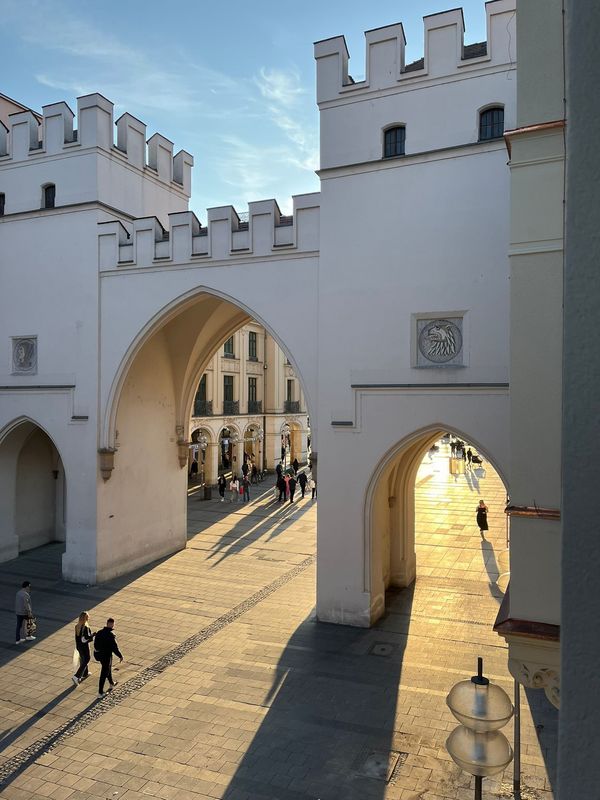
The program also included guided tours of the landmark building at Karlstor, which also houses the Institute’s renowned library. Its collection currently comprises more than 245,000 volumes, is unique worldwide in its international orientation and completeness, and attracts academics from around the world.


The new HERZOG MAX


While many German city centers are struggling with vacancies and dwindling interest, the building known as “Herzog Max” is a forward-looking project that sets standards for the transformation of city centers. This was highlighted in a panel discussion between architect Thomas Fechtner (OSA Ochs Schmidhuber Architekten) and owner representative Günter Koller (Wilhelm von Finck Hauptverwaltung GmbH) in conversation with the Institute’s managing director, Prof. Dr. Josef Drexl, and moderator Dr. Jan-Martin Wiarda. The remarkable redevelopment demonstrates how urban centers can reinvent themselves. The Institute also intends to use its new location as an opportunity to offer the urban society a “showcase to science” and to help the public better understand the significance of complex scientific topics.


The second day of the Grand Opening featured a Scientific Symposium on Innovation Research in Disruptive Times

Dr. Pedro Henrique D. Batista (left) with Dr. Gert Würtenberger (GRUR) at the presentation of the GRUR Dissertation Award. Photo: Andreas Burkhardt
Award  |  10/20/2025

Pedro Batista receives GRUR Dissertation Award and Faculty Prize for his Thesis on Genetic Resources and Patent Law

Pedro Henrique D. Batista, Senior Research Fellow at the Institute, received two awards for his dissertation: The German Association for Intellectual Property Law awarded him the GRUR Dissertation Award 2025. He also received the Faculty Prize from the Faculty of Law at Ludwig-Maximilians-Universität (LMU) in Munich.

Dr. Pedro Henrique D. Batista (left) with Dr. Gert Würtenberger (GRUR) at the presentation of the GRUR Dissertation Award. Photo: Andreas Burkhardt
Dr. Pedro Henrique D. Batista after receiving the faculty award in the main auditorium of LMU Munich.

Legal Framework for Genetic Resources

Genetic resources—such as genes from plants, animals, and microorganisms—play a central role in innovation in biotechnological fields, but access to them is often regulated and subject to requirements for consent from the country of origin and benefit sharing. Although international law—in particular the Convention on Biological Diversity and the Nagoya Protocol—is intended to ensure compliance with these rules by foreign users, benefit sharing has so far been largely absent. This leads to conflicts, including controversial patent law measures by some countries of origin, which can go as far as denying patent protection.


In his dissertation, The Right to Genetic Resources – Nagoya Protocol, Patent Law, and Other Regulatory OptionsPedro Henrique D. Batista uses a precise methodological analysis to develop concrete regulatory options at the national and international level that enable effective protection of genetic resources without unduly hindering biotechnological innovation. He also considers alternative instruments outside patent law and current international developments such as the new WIPO treaty and the debates on digital sequence information.


Batista's findings provide impetus for international and national regulation of genetic resources. They create a basis for fair participation, promote legal certainty, and combine the protection of biodiversity with the requirements of research and industry.


GRUR Dissertation Award

The GRUR Dissertation Award is presented annually at the annual conference of the German Association for Intellectual Property Law (GRUR). It recognizes outstanding dissertations in four different categories, namely (i) Patent and Utility Model Law, (ii) Copyright and Media Law, (iii) Trademark, Competition, and Design Law, and (iv) Data and Information Law. Batista received the award in the first category.


Faculty Prize of the LMU in Munich

The Faculty of Law at LMU in Munich awards its faculty prize annually to particularly outstanding dissertations. With this award, the faculty recognizes the scientific excellence and social contribution of Batista's work.


The Max Planck Institute for Innovation and Competition sincerely congratulates Pedro Henrique D. Batista on these two awards.


Pedro Henrique D. Batista
Das Recht an genetischen Ressourcen – Nagoya-Protokoll, Patentrecht und weitere regulatorische Optionen 
GWR - Schriftenreihe zum gewerblichen Rechtsschutz