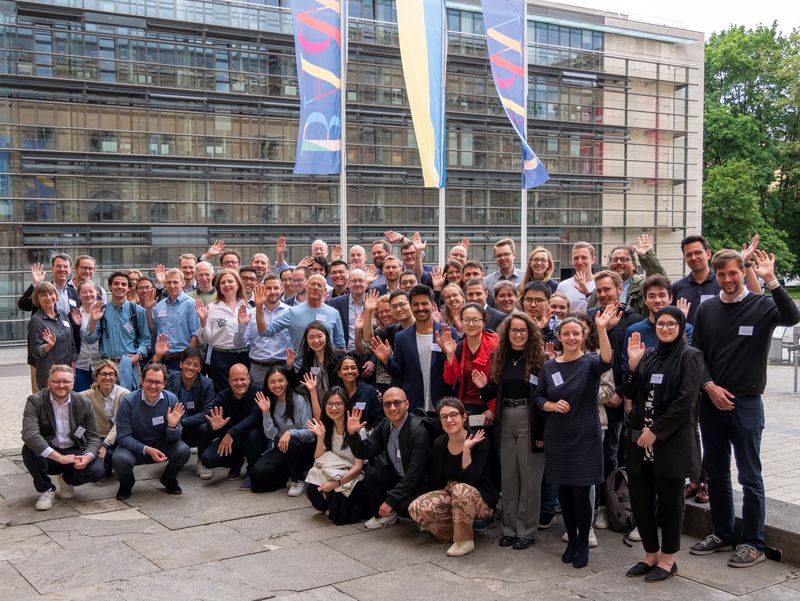
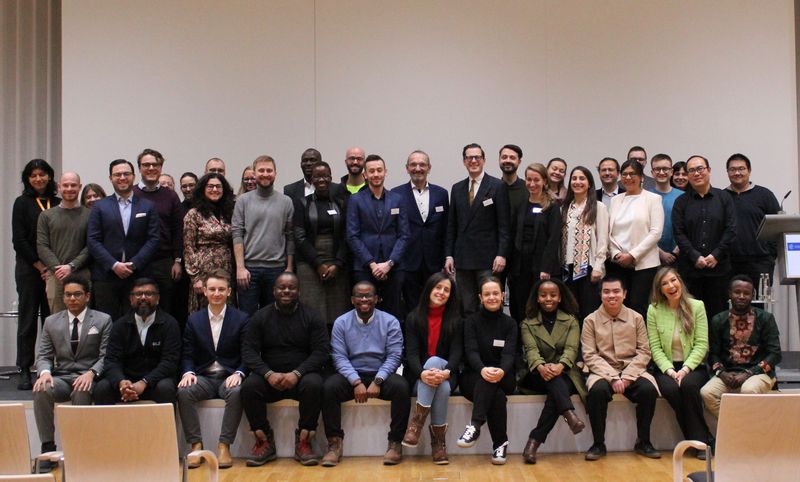
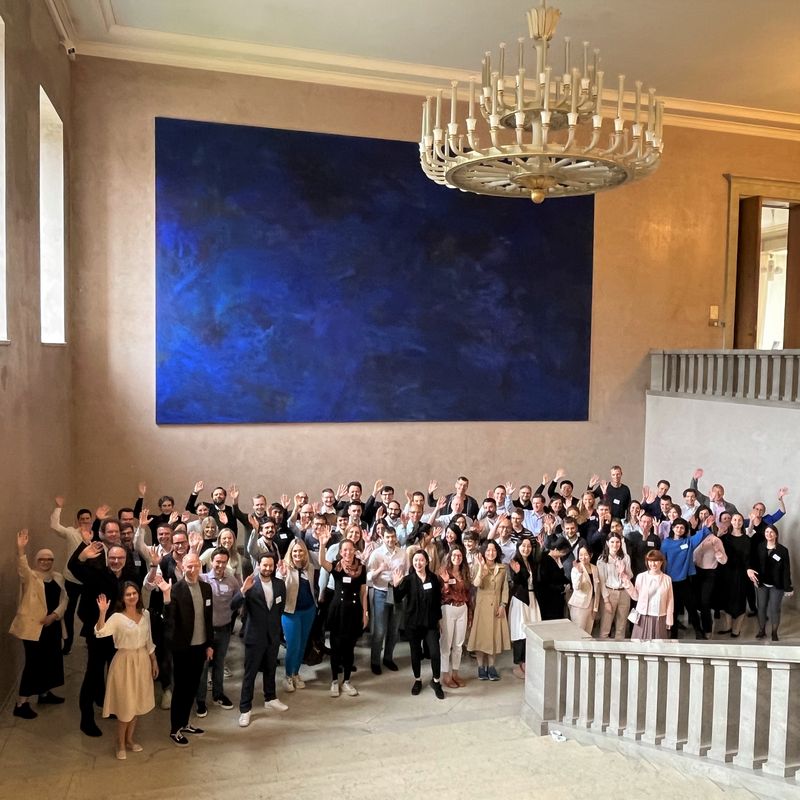
Large group of people standing and sitting in front of a building with arched windows and two blue flags, all facing the camera.
Event Report  |  05/29/2026

Munich Summer Institute 2026 – 10 Years of Successful Interdisciplinary Exchange

From 20 to 22 May 2026, the Munich Summer Institute (MSI) celebrated its 10th edition, held at the Max Planck Institute for Innovation and Competition (MPI) in the heart of Munich. The MSI has now firmly established its reputation as one of the leading forums for research at the intersection of economics, management, law, and related disciplines, bringing together researchers from around the world for three days of intensive academic exchange. The MSI Ph.D. Workshop – a platform for emerging young researchers – was also held, for the fifth time.

Large group of people standing and sitting in front of a building with arched windows and two blue flags, all facing the camera.
Participants of the MSI Main Conference 2026 (Photo: Myriam Rion)
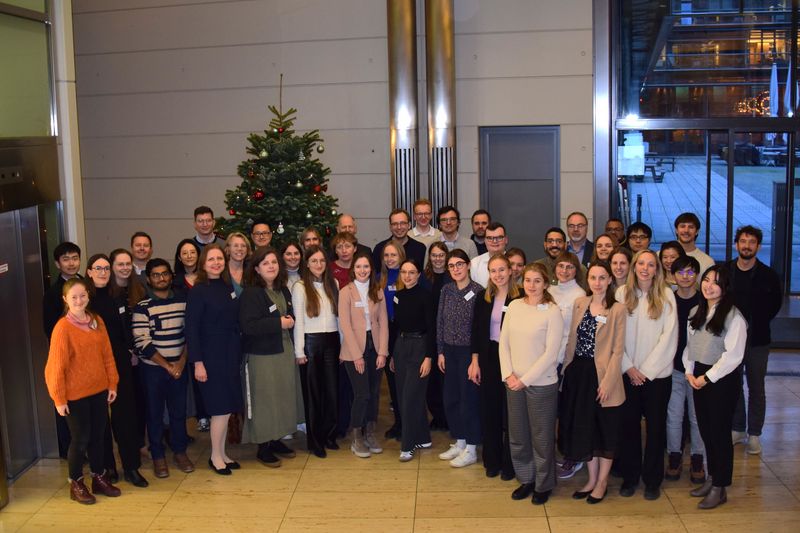
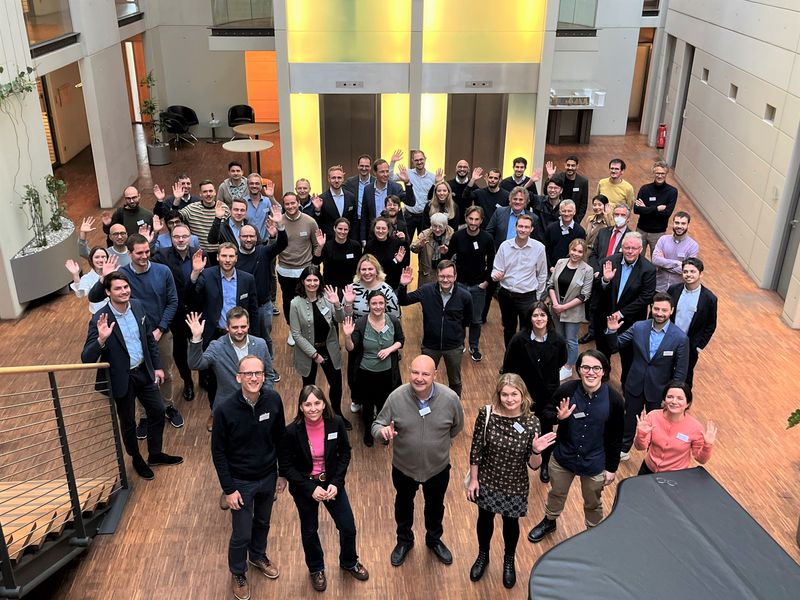
Group of MSI PhD Workshop participants standing in front of a curved staircase, all waving at the camera.
Participants of the MSI PhD Workshop (Photo: Myriam Rion)
Two women standing side by side, one holding a certificate reading 'BEST PAPER AWARD', both smiling at the camera.
Katarzyna Swiech, winner of MSI PhD Workshop Best Paper Award, with Hanna Hottenrott (Photo: MSI)
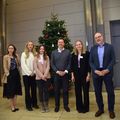
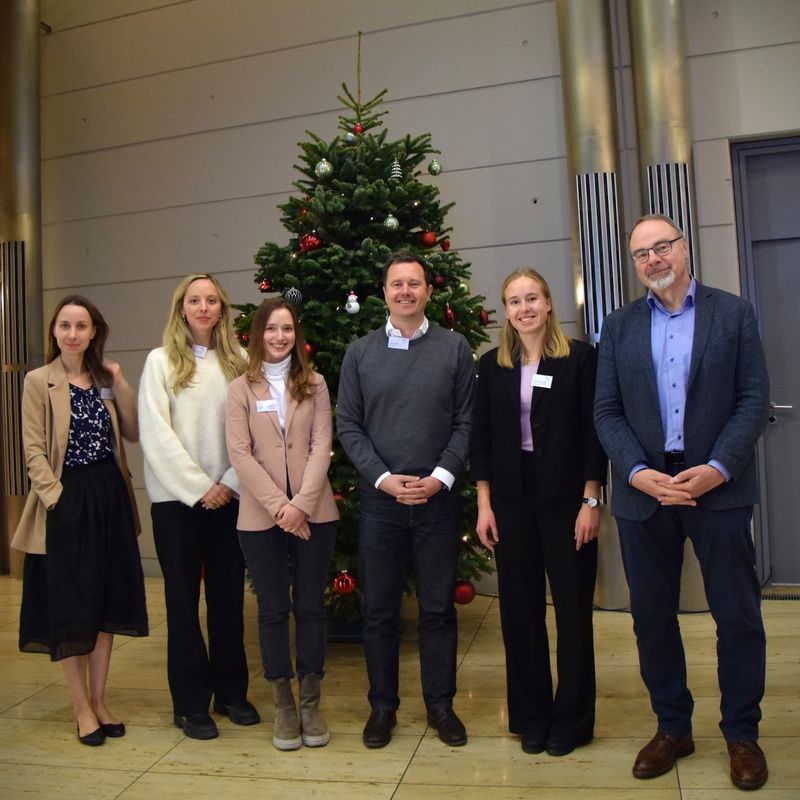
Six people stand indoors in front of a spiral staircase, all wearing name tags and dressed in semi-formal clothing.
The Organizers: Dietmar Harhoff, Tobias Kretschmer, Joachim Henkel, Hanna Hottenrott, Imke Reimers, and Stefan Bechtold (Photo: Myriam Rion)

Jointly organized by Stefan Bechtold (ETH Zurich), Dietmar Harhoff (MPI and LMU Munich), Joachim Henkel and Hanna Hottenrott (both TU Munich), Tobias Kretschmer and Daniel Obermeier (both LMU Munich), Christian Peukert (HEC Lausanne), and Imke Reimers (Northeastern University), the MSI 2026 featured an ambitious program: a Ph.D. workshop, 24 paper presentations with dedicated discussants, 17 poster slams across two sessions, two keynote lectures, and ample opportunities for informal exchange throughout a welcome reception, a Bavarian conference dinner, and guided city walks through Munich.


A Platform for Emerging Scholars


The MSI Ph.D. Workshop, held on 20 May 2026 ahead of the main conference, has become a well-established tradition, with this year marking its fifth edition. This year’s workshop brought together doctoral researchers working on artificial intelligence, digital platforms, digitalization, innovation, and human capital. Participants presented ongoing work and received detailed feedback from junior faculty and peers alike.


Among the contributors from the Munich research community, Denzel Glandel Tafur (ISTO, LMU School of Management) presented his dissertation project “Social Evaluation of AI-Disclosed Content in a User-Generated Media Commons”, with discussion from Marina Chugunova (MPI). The workshop’s Best Paper Award went to Katarzyna Swiech (Georgia Institute of Technology) for her solo-authored paper “A Tale of Two Zones: The Impact of Time Zones on Collaboration and Knowledge Flow” – a well-deserved recognition of an impressive piece of independent scholarship. The paper examines United States Patent and Trademark Office data on within-state pairs of co-patenting cities – some in the same time zone, some split – to show that even a minimal temporal distance can meaningfully influence inter-regional collaborations. The paper was discussed by Jordan Bisset (MPI).

This year’s Ph.D. workshop was organized by Daehyun Kim (lead), Dominik Asam, and Johannes Könemann (all MPI), together with Chengdi Fa and Svenja Friess (both ISTO).


Three Days of Research at the Frontier


The main conference opened with a session on digital platforms, ecosystems, and market power – a fitting start for a conference whose themes are highly topical. The following days covered a wide arc of contemporary questions: AI and digital knowledge production, decision-making and reputation in digital settings, venture capital and innovation finance, and the law and economics of intellectual property.


Researchers from the Munich community were again strongly represented throughout. Jonathan Jensen and Alexey Rusakov (ISTO Alumni) presented work derived from Alexey’s dissertation: “The Dynamic Returns to Generative AI on Knowledge Breadth vs. Depth: Evidence from GitHub”, discussed by Karin Hoisl (Affiliated Research Fellow at the MPI, and University of Mannheim). Frederike Eulitz (ISTO) served as a discussant in the afternoon session on digital labor markets, drawing on her dissertation research. Manfredi Aliberti (incoming MPI Senior Research Fellow) presented “Beyond the Lab: The Effect of Ph.D. Programs on Innovation”, and Michael E. Rose (MPI Senior Research Fellow) contributed a poster on “Better Science as a Byproduct: The Institutional Revolution in the German Empire”. Elisabeth Hofmeister (MPI Junior Research Fellow) co-authored a paper presented in the closing law and economics session on “Commercial Regulation and the Production of Science: Evidence from New Genomic Techniques in Agricultural Biotechnology”.


Two Keynotes on Big Questions


The conference featured two standout keynote lectures. Hong Luo (University of Toronto, Rotman School of Management) explored the intersections of safety, liability, and innovation. In her keynote, “Regulatory Innovation: Using Health Innovation Policy to Realign Health Care Economics with Today’s Biomedical Innovation Ecosystem”, Ariel D. Stern (Hasso Plattner Institute and University of Potsdam) delivered a wide-ranging talk on regulatory innovation and health care economics, prompting rich discussion across disciplinary lines.


Looking Forward


With its combination of high-level research presentations, a genuinely supportive atmosphere, and strong local roots in Munich’s research community, the MSI continues to offer a uniquely valuable forum for scholars at all career stages. Researchers with interests in innovation, digitalization, entrepreneurship, strategy, or intellectual property are strongly encouraged to consider applying or attending the conference when it returns in 2027. The date will be announced soon (see link below).


Svenja Friess & Myriam Rion


More information: https://www.munich-summer-institute.org/munich-summer-institute

A group of participants of the 7th SIPLA Conference is standing in a row in front of a bright wall outdoors
Event Report  |  05/18/2026

VII. SIPLA Conference: A Green Hydrogen Boost for the Latin American Market

The Institute’s Smart IP for Latin America (SIPLA) initiative, in collaboration with the  Universidad Católica de la Santísima Concepción (UCSC), organized the VII. SIPLA Conference on 13 May. Under the title “Toward a Sustainable Hydrogen Market in Latin America,” representatives from academia, industry, and government, as well as international experts, gathered in Chile. The goal was to engage in an interdisciplinary discussion of the opportunities and challenges facing this strategically important sector for the continent.

A group of participants of the 7th SIPLA Conference is standing in a row in front of a bright wall outdoors
Participants of the VII. SIPLA Conference. Photo: UCSC

In addition to hydrogen technologies, the focus was particularly on regulatory issues, governance, certification, and intellectual property. Reto Hilty, Director Emeritus at the Institute and Head of SIPLA, highlighted the region’s enormous potential: “Latin America possesses exceptional natural resources for the production of green hydrogen. The most important thing now is a coordinated policy and a common strategy among the countries.” He emphasized that the discussion of these topics alone was of great value. He emphasized that the discussion of these topics alone was of great value.


The event underscored the need for increased cooperation between academia, the private sector, and the government. While UCSC presented its long-standing research in the energy sector, industry called for clear regulatory frameworks. Rebeca Poleo of Vantaris Energy Advisors emphasized: “These are capital-intensive projects that require stable rules.” The strong response and the packed lecture hall attested to the high level of interest. The meeting was supported by partners such as GIZ, the EU Embassy, and the Ministry of Energy.


Please find more information on the SIPLA Conference on the SIPLA website:

VII SIPLA Conference


About SIPLA
 

Smart IP for Latin America is a research initiative of the Max Planck Institute for Innovation and Competition. It provides a neutral forum for academic and legal policy discourse on intellectual property and competition law in Latin America. The aim is to inform and advise academia, policymakers, business, and the general public on the basis of impartial and evidence-based fundamental research. The goal is to support the realization of Latin America's social, cultural, and economic potential.

Six people sit around a white table in a meeting room with a screen showing one person and a Ukrainian flag on the wall.
Event Report  |  04/01/2026

Methodology Workshop Advances Research on Integrating the Ukrainian Pharmaceutical Industry into EU Supply Chains

On 23 March 2026, the Institute hosted a methodology workshop as part of the research initiative From Legacy to Leadership: Rebuilding Ukraine’s Pharmaceutical Industry in Partnership with the EU”. The workshop brought together an interdisciplinary team to test core assumptions and refine the project’s analytical framework.

Six people sit around a white table in a meeting room with a screen showing one person and a Ukrainian flag on the wall.
Participants of the methodology workshop within the framework of the research initiative “Playbook Ukraine”.

The workshop is a cornerstone of the broader, VolkswagenStiftung-funded research initiative Playbook Ukraine, which which seeks to design a strategic framework for integrating Ukrainian pharma­ceutical manufacturing into European supply chains while addressing structural vulnerabilities in the EU system. Further background on the project can be found here: VolkswagenStiftung Funds Project to Revitalize Ukrainian Pharma Industry.


The methodology workshop convened a multidisciplinary team of researchers and experts, including Prof. Dr. Liudmyla Petrenko, Prof. Dr. Natalia Mazaraki, Dr. Peter R. Slowinski, Prof. Dr. Karin Hoisl, Elisabeth Hofmeister, and Viktoriia Kyrylenko.


The session focused on discussing scenarios for the future of the Ukrainian pharmaceutical industry within the EU regulatory and industrial ecosystem. A central objective was to stress-test the project’s guiding hypothesis: that targeted cooperation and strategic industrial alignment can simultaneously support the rebuilding of Ukraine’s pharmaceutical sector and contribute to reducing supply-chain vulnerabilities within the EU.


A key contribution came from industry expert Dr. Alexei Slobodianski, Lead EU Qualified Person at Thermo Fisher Scientific in Germany. With over two decades of experience in GMP-regulated environments – including vaccines, advanced therapy medicinal products (ATMPs), and blood products – Dr. Slobodianski provided a practitioner’s perspective essential for grounding economic theory in industrial reality. His insights helped resolve key uncertainties the research framework and clarified specific operational priorities, establishing a concrete roadmap for the project’s next steps.


Beyond its analytical function, the workshop strengthened interdisciplinary collaboration between legal, economic, and industry-oriented perspectives, ensuring that the project remains closely aligned with real-world pharmaceutical manufacturing constraints and regulatory requirements.


More information:


See Research Poster “From Legacy to Leadership – A Playbook to Rebuild Ukraine’s Pharmaceutical Industry in Partnership with the EU” (PDF) with details on data and methodology, strategies, as well as potential applications and impact.

High-rise building of Universidad Católica de la Santísima Concepción with large banner and surrounding green areas
Event Report  |  01/15/2026

SIPLA Initiative: Events in Chile and Colombia

The Smart IP for Latin America Initiative (SIPLA) has held during 2025 a series of events in Chile and Colombia as part of its international cooperation activities. The Initiative is thus preparing for its 2026 Annual Conference and exploring new research projects.

High-rise building of Universidad Católica de la Santísima Concepción with large banner and surrounding green areas
Universidad Católica de la Santísima Concepción (UCSC), Chile

Annual Conference: Preparatory Meeting in Concepción
 

Preparatory meetings for the 2026 Annual Conference took place in Concepción, Chile, in November 2025. The team visited the Energy Center at the Universidad Católica de la Santísima Concepción (UCSC) and held talks on possible cooperation in the field of energy technologies and intellectual property. The Chilean university is considered an important partner for scientific exchange in Latin America.


Five Workshops in Bogotá
 

In Bogotá, Colombia, SIPLA organized during November 2025 five exploratory workshops to identify potential cooperation with local experts regarding new SIPLA research projects .


Upcycling and Circular Innovation
The workshop on upcycling and circular innovation highlighted the role of intellectual property in sustainable economic models. Participants discussed how innovations in the circular economy can be legally protected and promoted. A particular focus was placed on the question of how traditional property rights need to be adapted to new business models. The experts analyzed successful examples from the region and identified obstacles that hinder the creative reuse of materials.


Greenwashing
The topic of greenwashing was the focus of another workshop. Experts from the fields of law, business, and civil society analyzed misleading environmental claims and developed approaches for more effective regulation. The discussions showed that many Latin American countries do not yet have sufficient legal instruments to punish false sustainability claims. Participants developed proposals for transparency requirements and sanction mechanisms to better protect consumers.


Plastic and Microplastics
The legal challenges posed by plastic and microplastics were the focus of a third workshop. Discussions focused on regulatory gaps and possible solutions to this growing environmental problem. Particular attention was paid to the question of how liability rules can be designed to oblige manufacturers to take responsibility for their products. The experts looked at international examples and discussed which approaches could be transferred to Latin American contexts.


Hydrogen Technologies
A workshop on hydrogen technologies examined the tension between patent protection, regulation, and innovation. Participants discussed how Latin American countries can exploit their potential in this promising energy sector. A key question was whether strict patent rights inhibit technology diffusion or whether they create necessary investment incentives. The discussions also took into account government support strategies and the importance of technology transfer for the region. This workshop has served as a prelude to the upcoming Annual Conference in Concepción in 2026.


Biological Inputs
The final workshop focused on biological inputs in sustainable agriculture. Biological inputs include products such as biofertilizers, biostimulants, and soil improvers, as well as biological pesticides. Experts discussed regulatory frameworks, innovation incentives, and competition issues in the agricultural sector. One focus was on the approval of biological pesticides and fertilizers, which are often subject to lengthy procedures. Participants examined how regulation can be simplified without compromising safety standards. They also discussed smallholder farmers' access to innovative bio-inputs and possible support instruments.


About SIPLA
 

Smart IP for Latin America is a research initiative of the Max Planck Institute for Innovation and Competition. It provides a neutral forum for academic and legal policy discourse on intellectual property and competition law in Latin America. The aim is to inform and advise academia, policymakers, business, and the general public on the basis of impartial and evidence-based fundamental research. The goal is to support the realization of Latin America's social, cultural, and economic potential.

Participants of the RISE8 Workshop.
Event Report  |  12/17/2025

RISE8 Workshop 2025 − Fostering Scientific Exchange for the Next Generation of Innovation Scholars

The 8th edition of our annual Research in Innovation, Science, and Entrepreneurship (RISE) workshop, now a cherished pre-Christmas tradition, took place on 15/16 December 2025. Organized by young researchers at our Institute, the workshop serves as a platform for early-career scholars dedicated to the study of innovation.

Participants of the RISE8 Workshop.
Participants of the RISE8 Workshop. Photo: Myriam Rion
The Organizing Team.
The Organizing Team. Photo: Myriam Rion
Matt Marx during his keynote address.
Matt Marx during his keynote address. Photo: Myriam Rion

For the first time, the Department for Innovation and Entrepreneurship Research hosted the event at the Institute’s new premises at Munich’s Stachus and welcomed more than 40 presenters, discussants, and attendants from over 20 international universities. The program featured twelve paper presentations across seven specialized sessions covering topics such as gender and patents, green technologies, policy and innovation, technology transfer, the science of science, and artificial intelligence.


A major highlight of this year's event was the keynote address by Matt Marx, a professor at Cornell University and Department Editor at the renowned journal Management Science. In his inspiring address, Matt Marx introduced a new initiative that provides large-scale, open-access datasets. These datasets will enable more thorough research connecting scientific discoveries to innovation and entrepreneurship. This new resource promises to be a transformative tool for RISE participants and the broader innovation research community.


We would like to extend a heartfelt thank you to everyone who contributed to the resounding success of the RISE8 Workshop 2025. We are incredibly grateful to our inspiring keynote speaker, insightful discussants, and talented presenters for their exceptional contributions.


Special thanks go to the organizing team with Dietmar Harhoff, Dominik Asam, Johannes Könemann, Anastasiia Lutsenko, and Ulrike Morgalla, whose hard work made this event possible.


We are leaving this year's workshop feeling highly motivated and looking forward to RISE9 in 2026 with great enthusiasm!


The complete program for review:

Program RISE8 2025

Opening symposium "Innovation Research in Disruptive Times"
Event Report  |  10/24/2025

Opening Symposium on Innovation Research in Disruptive Times

On Tuesday, 21 October 2025, the second event in the celebrations marking the grand opening of the Institute’s new premises at Stachus took place in the form of a scientific symposium featuring two panel discussions on topics that are shaping innovation research in disruptive times. Over one hundred guests received thought-provoking insights and were able to engage in intensive discussions with colleagues from various disciplines.

Opening symposium "Innovation Research in Disruptive Times"
Opening symposium "Innovation Research in Disruptive Times". Photo: Myriam Rion
Panel “Innovation and New Geopolitics – Implications for Research“
Panel “Innovation and New Geopolitics – Implications for Research“. Photo: Myriam Rion
Panel “Regulation Between Global Challenges and Deglobalization”
Panel “Regulation Between Global Challenges and Deglobalization”. Photo: Myriam Rion

The first panel, moderated by Marina Chugunova, who has been a Senior Research Fellow in the Institute’s economics department since 2018, addressed the relationship between innovation and new geopolitics. The second panel was hosted by Heiko Richter, who was a Senior Research Fellow in the Institute’s legal department until September of this year and took over the Chair of Private Law and Regulation of the Digital Economy and Society at the German University of Administrative Sciences Speyer in October 2025. Together with his guests, he examined questions of regulation between geopolitical challenges and deglobalization.


Panel “Innovation and New Geopolitics – Implications for Research“
 

  • Prof. Fabian Gaessler (Pompeu Fabra University)
  • Prof. Dr. Carolin Haeussler (University of Passau / Commission of Experts for Research and Innovation)
  • Prof. Dr. Hanna Hottenrott (Technical University of Munich / TransforM Cluster of Excellence)
  • Prof. Dr. Rupprecht Podszun (Monopolies Commission / Heinrich Heine University Düsseldorf)
  • Dr. Marina Chugunova (Moderator)

During the panel discussion, experts in economics, law, and science policy explored how geopolitical tensions are reshaping global research collaboration, talent mobility, and technological competition. The discussion drew on historical parallels, current regulatory debates, and the realities faced by universities, research institutions, and companies. A central theme was the research community’s growing responsibility of to engage actively with society and decision-makers in order to ensure that scientific insights are clearly and meaningfully communicated at a time when misinformation and political polarization increasingly challenge evidence-based policymaking.


The panelists emphasized that we are living through a period of major reorientation in research and innovation, characterized by shifts in global alliances, tighter controls on sensitive technologies, and new questions about the balance between openness and security. The experts debated whether innovation today is driven more by competition or cooperation as they discussed the role of Big Tech, the challenges of regulating technologies that evolve faster than legal frameworks, and the growing importance of dual-use research. The discussion underscored that resilience in a rapidly changing environment requires not only effective governance but also societal trust.


A clear takeaway emerged: Europe’s ability to remain open, credible, and strategically agile will determine its position in the global innovation landscape for years to come.


Panel “Regulation Between Global Challenges and Deglobalization”
 

  • Prof. Dr. Michèle Finck (University of Tübingen)
  • Prof. Dr. Henning Grosse Ruse-Khan (University of Cambridge)
  • Dr. Malte Toetzke (Net Zero Lab / Max Planck Institute for Innovation and Competition)
  • Prof. Dr. Peter Yu (Texas A&M University)
  • Prof. Dr. Heiko Richter (Moderator)

The panel explored the evolving landscape of regulation at the intersection of global challenges and deglobalization pressures, guided by questions on how transnational issues like AI, climate change, intellectual property, and trade are addressed amid increasing national fragmentation. The discussants began by examining the EU’s role in digital and AI regulation, highlighting the Union’s shift toward a more assertive regulatory paradigm that still grapples with the tension between Member State interests and the need for global standards.


The conversation moved to the topic of climate change, where the transformative potential of AI in research and the uneven progress of international decarbonization efforts were discussed, emphasizing both the promise and limitations of current regulatory instruments. The focus then shifted to the regulatory philosophies of the U.S. and China, particularly in digital and IP domains, revealing divergent priorities and strategies shaped by economic and geopolitical competition. The panel concluded with a debate on the capacity and future relevance of multilateral institutions like the WTO in a more fragmented world, critically analyzing their limits and prospects for fostering global regulatory coherence.


The key insight emerging from the discussion was that effective regulation now requires navigating and mediating between global coordination needs and intensifying national retrenchment. Ultimately, the panel illustrated that regulation is increasingly positioned as a balancing act – not purely globalist nor strictly national, but as a flexible instrument that must adapt to shifting political, technological, and economic dynamics.

Entrance in Herzog-Max-Strasse
Event Report  |  10/23/2025

Innovation Research in the Very Heart of Munich

On 20 October, the Institute officially opened its new premises at Stachus, in the heart of Munich, with a festive opening ceremony. Representatives from academia, politics, the city, and society praised the relocation as an important milestone for the Institute, the City of Munich, and for anchoring research in society.

Entrance in Herzog-Max-Strasse
Entrance in Herzog-Max-Strasse. Photo: Myriam Rion
Patrick Cramer, President of the Max Planck Society
Patrick Cramer, President of the Max Planck Society. Photo: Myriam Rion
Johannes Eberle  (Bavarian State Ministry for Science and the Arts)
Johannes Eberle (Bavarian State Ministry for Science and the Arts). Photo: Myriam Rion
The First Deputy Mayor of Munich, Dominik Krause, with the Managing Director of the Institute, Josef Drexl
The First Deputy Mayor of Munich, Dominik Krause, with the Managing Director of the Institute, Josef Drexl. Photo: Myriam Rion

In their welcoming addresses, Patrick Cramer, President of the Max Planck Society, and leading representatives from science, politics, and society addressed around 120 guests in welcoming speeches, emphasizing the importance of the Institute’s research, and the opportunities to create impulses in the new environment. It became clear that, in light of current societal developments, research is not only a driving force for innovation and progress, but it must also be anchored deeper in the heart of society than ever before.


Prof. Dr. Patrick Cramer, President of the Max Planck Society

“The Max Planck Institute for Innovation and Competition is at the cutting edge of our times with its mission. It researches the legal and economic foundations of innovation, competition, and regulation. At a time when Germany must reinvent itself amid digital transformation, bureaucratic inflexibility, and geopolitical tensions, this research — especially this research — is indispensable. It is research that first poses the questions before providing the answers through which the Institute offers guidance for the societal and political process — a process we can never replace, only accompany. The relocation sends a clear signal: science — and particularly such important research as is conducted here, which also touches on the future of our economic system — belongs at the heart of the city, at the heart of society.”


Dr. Johannes Eberle, Bavarian State Ministry for Science and the Arts, Head of the department Research/Science System

“The Max Planck Institute for Innovation and Competition embodies everything a science minister, an economics minister, or a federal minister could wish for: it delivers outstanding research that does not remain confined to the so-called ivory tower, but reaches and impacts society as a whole — and has done so for almost 60 years. Since its founding in 1966, the Institute has been a key source of inspiration for the major issues of our time. […] Yet, an institute devoted to innovation and competition does not, of course, live primarily on its past achievements, but on its creative energy for the present and the future. Here, too, it is evident that the Institute has its finger on the pulse of the times, contributing more than ever to addressing the key questions of our society. It makes valuable contributions to the great transformations of our century, particularly in the field of artificial intelligence — especially with regard to the major challenges of data and copyright law. Moreover, it provides highly relevant research on how innovation and government incentives can help stimulate a stagnating economy.”


Dominik Krause, First Deputy Mayor of the City of Munich

“The Max Planck Institutes are a fundamental part of the innovation ecosystem we have here in Munich — and this is especially true for the Max Planck Institute for Innovation and Competition. I would also like to congratulate you on your excellent choice of the Herzog Max building. You and your colleagues are doing outstanding work — now in a location that could not be more central, and one that sets an example for the future of Munich’s city center. Congratulations on your relocation — also on behalf of the City of Munich. We are truly delighted to have you here, in the very heart of our city.”


Panel  “Inform, Advise, Shape – Innovation Research and Policy”


The event centered on a panel discussion entitled “Inform, Advise, Shape – Innovation Research and Policy”, featuring notable figures. Journalist and moderator Dr. Jan-Martin Wiarda spoke with leading experts about key issues at the interface between science and policy. The panel guests Prof. Dr. Irene Bertschek (Chair of the Commission of Experts for Research and Innovation), Rafael Laguna de la Vera (Director of the Federal Agency for Breakthrough Innovations SPRIND), and Prof. Dr. Rupprecht Podszun (Member of the Monopolies Commission) discussed, among other things, the role that innovation research can play in policy advice and where its limits lie, how social values can be reconciled with economic interests, how major challenges of our time can be addressed, and which new dangers might arise at the same time.


Perspectives of the Max Planck Institute for Innovation and Competition


In the follow-up conversation to the discussion “Informing, Advising, Shaping – Innovation Research and Policy”, Josef Drexl and Dietmar Harhoff spoke with Jan-Martin Wiarda about the perspectives for the future of the Max Planck Institute for Innovation and Competition. Key impulses included the further promotion of interdisciplinary collaboration – extending beyond law and economics to additional disciplines, such as computer science – in order to better understand innovation, markets, and their regulatory frameworks. Law is viewed as an enabler of innovation, while mutual learning and exchange, for example through networking with companies, as well as the continuous observation of technological and societal developments, remain essential approaches for future research.


The program also included guided tours of the landmark building at Karlstor, which also houses the Institute’s renowned library. Its collection currently comprises more than 245,000 volumes, is unique worldwide in its international orientation and completeness, and attracts academics from around the world.


The new HERZOG MAX


While many German city centers are struggling with vacancies and dwindling interest, the building known as “Herzog Max” is a forward-looking project that sets standards for the transformation of city centers. This was highlighted in a panel discussion between architect Thomas Fechtner (OSA Ochs Schmidhuber Architekten) and owner representative Günter Koller (Wilhelm von Finck Hauptverwaltung GmbH) in conversation with the Institute’s managing director, Prof. Dr. Josef Drexl, and moderator Dr. Jan-Martin Wiarda. The remarkable redevelopment demonstrates how urban centers can reinvent themselves. The Institute also intends to use its new location as an opportunity to offer the urban society a “showcase to science” and to help the public better understand the significance of complex scientific topics.


The second day of the Grand Opening featured a Scientific Symposium on Innovation Research in Disruptive Times

Construction site entrance to the new institute building with signs pointing to the event
Event Report  |  06/02/2025

Munich Summer Institute 2025

The first event to be held at the Instituteʼs new venue was the Munich Summer Institute (MSI), now in its ninth year. Since its premiere in 2016, the MSI has aimed to foster net­working within an international and interdisciplinary research community. It is jointly organized by the Center for Law & Economics at ETH Zurich, the Max Planck Institute for Innovation and Competition, the Technical University of Munich, the ISTO at LMU Munich, HEC Lausanne, and Cornell University.

Group photo at the Munich Summer Institute 2025
Participants of the Munich Summer Institute 2025. Photo: Myriam Rion
Construction site entrance to the new institute building with signs pointing to the event
A certain pioneering spirit was still called for when the first event was held in the new Institute building. Photo: Myriam Rion
New event space at the Munich Summer Institute 2025.
Baptism of fire for the auditorium in the new Institute building. Photo: Myriam Rion

The MSI 2025 took place from 26 to 28 May 2025 with around 85 participants in the Institute’s new premises – a successful and also instructive baptism of fire in terms of technical and procedural aspects. This year’s event offered an inspiring synthesis of academic exchange and networking in the research fields of digitalization, artificial intelligence, innovation, intellectual property, organizational design and digital governance.


The main conference was preceded by the fourth MSI Ph.D. Workshop on 21 May 2025 at Ludwig-Maximilians-Universität (LMU) Munich. This one-day event brought together early career researchers from across Europe and beyond. The program included five sessions that focused on digitalization, platform competition, entrepreneurship and eco-innovation, and innovation and learning. Projects ranged from empirical studies on copyright enforcement and algorithmic influence to research on carbon markets and intergenerational knowledge transfer.


The program of this year's main conference included two keynote speeches, 16 presentations to the plenary and two poster sessions, again preceded by very engaging poster slams. The program of the first day started with a guided city tour from the LMU through the historic old town of Munich to the new Institute building. The scientific part was dedicated to three lectures on the topic of organization. The day ended with the official reception.


The presentations on the second day of the conference dealt with topics from the areas of platforms and consumer computing technologies, AI and innovation as well as collaborative research and development. In her keynote entitled Innovation in Digital Platforms: How Can Regulation and Antitrust Help?”, Fiona Scott Morton, Theodore Nierenberg Professor of Economics at Yale University School of Management and Adjunct Professor at Yale Law School, presented her latest research on antitrust policy and platform regulation.


In keeping with good MSI tradition, the second day ended with a hearty dinner in a typical Bavarian tavern. Here, Khwan Kim (INSEAD) received this year’s Best Paper Award for his paperKindle’s Shadow: How Digitization Dims Novelty in Creative Industries”, co-authored with Manav Raj, which provides new insights into the unintended consequences of digital transformation..


The last day of the conference featured presentations on the topics of patents, data protection and security. Michela Giorcelli, Associate Professor at the University of California, Los Angeles, provided a historical perspective on the diffusion of innovations in post-war economies in her keynote speech onThe Diffusion of Soft Technologies During and After World War II”, presenting compelling reflections on long-term growth and technological change.


All those involved in the organization would like to thank the speakers, discussants and the participants for an exciting Munich Summer Institute 2025. We are already looking forward to the Munich Summer Institute 2026, then the tenth MSI!


More information: http://munich-summer-institute.org

RISE7 Organizing Team with Alexander Oettl
Event Report  |  01/13/2025

RISE7 Workshop 2024 – Two Days of Inspiring Scientific Exchange for Young Researchers

Shortly before Christmas, the 7th Research in Innovation, Science and Entrepreneurship Workshop took place, which has been organized by young researchers of the Institute for young researchers from all over the world since 2018. Alexander Oettl from the Scheller College of Business at the Georgia Institute of Technology was invited to give the keynote speech.

RISE7 Organizing Team with Alexander Oettl
RISE7 Organizing Team with Keynote Speaker Alexander Oettl (GA Tech). Photo: Myriam Rion
Participants of the RISE7 Workshop
Participants of the RISE7 Workshop. Photo: Myriam Rion

More than 40 international young researchers from over 20 universities around the globe attended the RISE 7 Workshop on 17 and 18 December 2024. For the seventh time now, the two-day event was organized by Ph.D. students from the Department for Innovation and Entrepreneurship Research to give young scholars the opportunity to present and discuss their work.


Twelve selected doctoral students and recent graduates presented their work, which was then discussed by experienced researchers. The presentations were divided into seven sessions and provided an exciting program on the topics of Corporate Innovation, Knowledge Generation and Innovation, Green Innovation, Innovation in Young Firms, Science of Science, Innovation in the Life Sciences, and Innovation Beyond Patents and Networks.


A special highlight of the event was the inspiring keynote by Alexander Oettl, Professor of Strategy & Innovation at the Scheller College of Business of the Georgia Institute of Technology and Research Associate at the National Bureau of Economic Research. He explored the future of science and spoke on the topic “Building Tomorrow’s Science: The Interplay of Talent, Geography, and AI”. His talk provided ample material for vivid discussions.


See the complete program with all presentations.


We thank all participants, including the fantastic keynote speaker, thorough discussants and great presenters for a truly outstanding RISE7 Workshop 2024. Our special thanks go to everyone who was so involved in the organization, in particular Carolin Formella, Elisabeth Hofmeister, Anastasiia Lutsenko, and Ulrike Morgalla. The workshop was held for the last time at the Institute’s current location on Marstallplatz in Munich. We look forward with great enthusiasm and motivation to the RISE8 Workshop 2025 – then at the new location of the Max Planck Institute for Innovation and Competition at Munich’s Stachus.

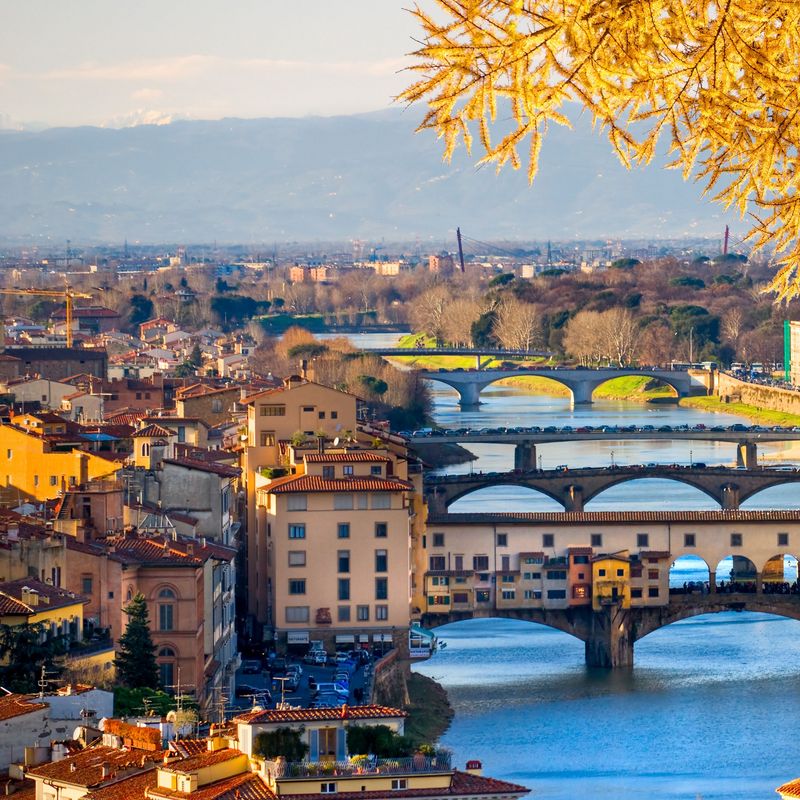
Aerial view of Florence showing the Arno River and the Ponte Vecchio bridge in the foreground
Event Report  |  10/07/2024

Florence Conference on IP, Competition and Innovation

On 3 and 4 October, the Conference on Intellectual Property, Competition and Innovation was held in Florence. The conference, jointly organized by the European University Institute and the Max Planck Institute for Innovation and Competition, presented a selection of previously unpublished papers by lawyers and economists on a wide range of topics at the intersection of intellectual property and competition law.

Aerial view of Florence showing the Arno River and the Ponte Vecchio bridge in the foreground
Photo: Adobe Stock

Prof. Herbert Hovenkamp's keynote speech opened the conference and set the scene by offering valuable insights into the latest intellectual property and antitrust issues. Distributed in several parallel sessions, the papers covered both horizontal, crosscutting issues as well as specific aspects related to standard essential patents, AI, patenting strategies in the pharmaceutical sector or press publishers’ rights, among others. A roundtable with industry representatives and legal practitioners helped to link the academic perspective to market realities, while the final debate with Hanna Anttilainen from the DG Competition at the European Commission offered an excellent opportunity to learn about and discuss current and future developments on innovation-related competition policy.